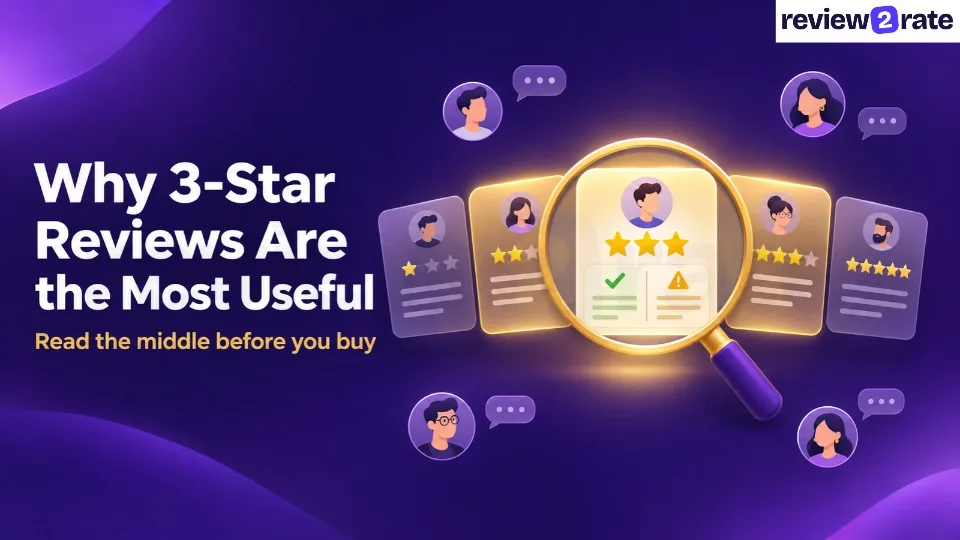
Why the 3-Star Reviews Are Often the Most Useful Ones
You are comparing two pairs of wireless earbuds. Both have a similar rating. You scroll to the reviews and find three of them.
Review 1 (5 stars): "Superb!! Best earbuds ever. Everyone must buy."
Review 2 (1 star): "Worst product. Total waste of money. Do not buy."
Review 3 (3 stars): "Sound quality is great for the price and the bass is punchy. But the left earbud disconnects now and then, and the case feels flimsy. Fine for commuting, but I would not rely on them for calls."
Which one actually helps you decide?
If you picked the third, you already understand why 3-star reviews are often the most useful reviews on any website. In this guide, you will learn why, how to read them in under a minute, and when to be careful with them.
The short answer: Five-star and one-star reviews tell you how someone felt. Three-star reviews more often tell you what happened. They describe strengths and weaknesses together, which is exactly what you need to decide whether a product, service or business suits you.
Why Extreme Reviews Often Tell You Less
People tend to write the most passionate reviews when they feel strongly. That is natural, and it is not a criticism of reviewers. But strong emotions come with side effects:
- Five-star reviews are often written in the glow of a happy moment, such as the day a product arrives. They can be brief, enthusiastic and light on detail.
- One-star reviews are often written in frustration. Some describe serious, genuine faults. Others are really about delivery delays, a seller's attitude or a single bad day.
- Three-star reviews tend to be written more calmly, by people who weighed up the good and the bad before rating.
This does not mean that five-star and one-star reviews are useless. Many are detailed and honest. It simply means that, on average, mixed reviews are more likely to contain the balanced information that helps you decide.
What a Good 3-Star Review Looks Like
A helpful middle-of-the-road review usually has four parts. Look again at the earbuds example:
- What worked: "Sound quality is great for the price and the bass is punchy."
- What did not: "The left earbud disconnects now and then, and the case feels flimsy."
- Who it suits: "Fine for commuting."
- Who it does not suit: "I would not rely on them for calls."
With those four parts, you can answer the only question that matters: "Is this right for me?" If you want music on the metro, this reviewer has just helped you. If you take lots of work calls, the same review has just saved you money.
Note: The example reviews in this article are illustrative, written to show what different star levels often look like.
Try It Yourself: Which Review Helps You Most?
Back to the three earbud reviews at the top. Decide first, then click to see the answer.
Question 1: You mainly take work calls. Which review gives you the most useful information?
Answer: Review 3, the 3-star. It is the only one that mentions call reliability, and it warns you that the earbuds may not be dependable for that purpose. The 5-star and 1-star reviews say nothing about calls at all.
Question 2: You mainly listen to music while commuting. Which review helps now?
Answer: Still Review 3. It tells you that the sound is good for the price and the bass is punchy, and that the earbuds are fine for commuting. The only worry is the occasional disconnect, and you can check whether other reviewers mention it too.
Question 3: Does the 1-star review mean the earbuds are bad?
Not necessarily. "Worst product, total waste of money" gives no reason. It could be a genuine fault, a delivery problem or a mismatch of expectations. Without details, you cannot act on it. If several one-star reviews describe the same specific problem, that is a different story.
5 Reasons 3-Star Reviews Are So Valuable
1. They Show You the Trade-Offs
Almost every product involves trade-offs. A laptop may have a superb screen but a short battery life. A restaurant may serve delicious food but run slowly at weekends. A hotel may have a perfect location but thin walls.
A three-star review often puts these trade-offs side by side, so you can see whether the downsides matter to you.
2. They Are Often Less Emotional
When someone is delighted or furious, they may focus on one moment and overlook the rest. A person who chooses the middle of the scale has often thought about the whole experience.
3. They Tell You Who the Product Is For
The best 3-star reviews say things like "good for beginners but not for professionals" or "fine for small kitchens but too noisy for open-plan homes." That kind of context is hard to find in a one-line five-star review.
4. They Help You Spot Patterns
One reviewer saying a phone runs warm is an anecdote. Eight three-star reviewers saying the same thing is a pattern. Mixed reviews make repeated issues easier to spot because the reviewers are calmly describing what they noticed.
5. They Add Balance to Your Research
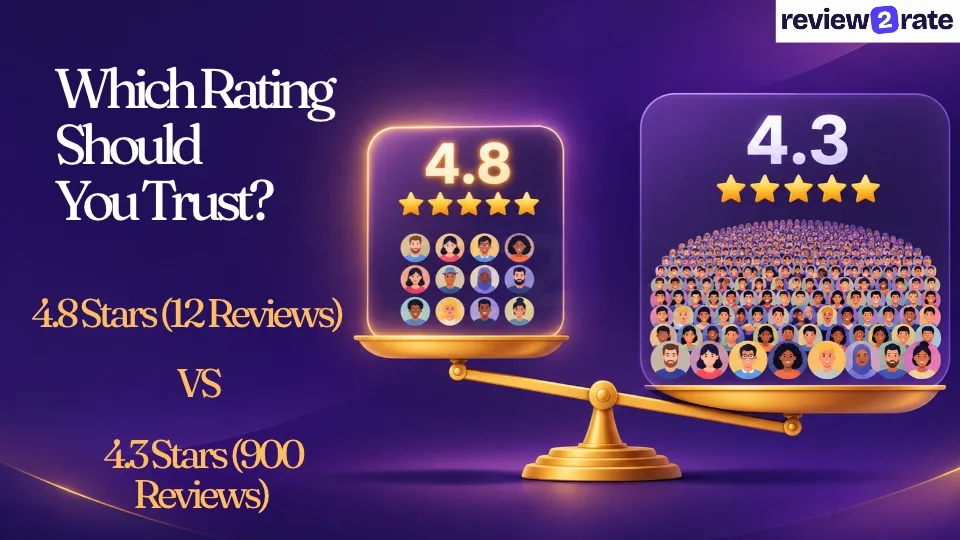
In our guide on choosing between a 4.8 from 12 reviews and a 4.3 from 900, we explained that the star average is only half the story. Reading mixed reviews is one of the simplest ways to fill in the other half.
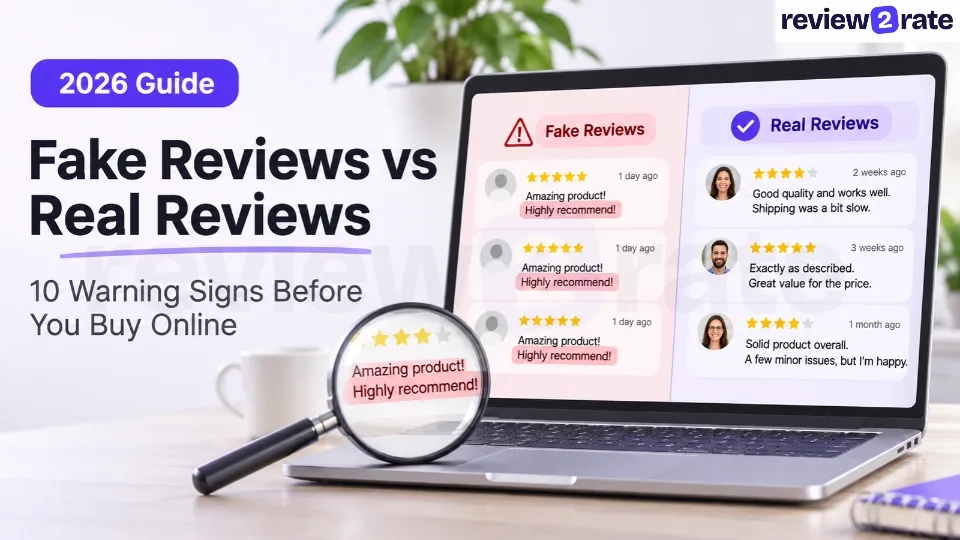
Be aware that no star level is automatically more honest than another. Fake or incentivised reviews can appear at any rating, and our guide to warning signs of fake reviews explains what to look for.
5-Star vs 3-Star vs 1-Star: What Each Usually Tells You
| Star level | What it often contains | What it can miss |
|---|---|---|
| 5 stars | Happy first impressions, strengths, praise for service | Long-term performance, weaknesses, comparisons |
| 4 stars | Mostly positive experiences with small caveats | Sometimes the caveat is mentioned only briefly |
| 3 stars | Strengths and weaknesses together, who it suits, trade-offs | Can be vague if the reviewer only writes "average" |
| 2 stars | Specific disappointments, often with a reason | May overlook the product's good points |
| 1 star | Serious faults, bad service experiences, warnings | May reflect delivery, seller or expectation problems rather than the product |
These are tendencies, not rules. A detailed five-star or one-star review can be extremely valuable, and a vague three-star review can be unhelpful.
The 60-Second 3-Star Scan
Here is a simple routine you can use on any product, service or business listing.
- Filter to the middle. Open the three-star and, if you have time, four-star and two-star reviews as well.
- Read the five newest. Recent reviews show what you are likely to get today.
- Underline the complaints. Write down each problem in a few words.
- Count repeats. If the same issue appears in three or more reviews, treat it as a pattern.
- Sort each issue. Mark it as a deal-breaker, tolerable or irrelevant to you.
- Decide. If you have no deal-breakers, the product is probably a good fit.
For example, if a washing machine's mixed reviews repeatedly mention a loud spin cycle, and you live in a small flat with thin walls, that is a deal-breaker for you. If you have a utility room far from the bedrooms, it may be irrelevant.
Deal-Breaker or Dealable? A Quick Quiz
Here are some real-sounding complaints from mixed reviews. Think about how you would treat each one, then click to compare.
Complaint A: "Delivery was two days late."
Usually dealable. A late delivery is mostly about the seller or courier, not about the product itself. It matters if you need the item by a specific date, so check the seller's track record separately.
Complaint B: "Battery only lasts about a day with heavy gaming."
Depends on you. If you play games for hours, this may be a deal-breaker. If you mostly browse, message and watch videos, it is probably irrelevant. This is the kind of detail that only mixed reviews tend to give.
Complaint C: "Strong plastic smell for the first week."
Usually minor. Many new products have a smell that fades. But if you are sensitive to smells or the product is for a baby's room, you may want to look into it further.
Complaint D: "Stopped working after three months. Support took weeks to reply."
Treat as a red flag, especially if it repeats. One report could be bad luck. Several reports of early failure and slow support suggest a pattern. Check the warranty terms and the seller's after-sales reputation.
When 3-Star Reviews Can Mislead You
Mixed reviews are useful, but they are not magic. Watch out for these situations:
- The rating is about something else. A reviewer may give three stars because of packaging, delivery or a billing issue that has nothing to do with the product's quality.
- The review is vague. "Average product, okay okay" tells you very little. Skip it and move to a more detailed one.
- The reviewer has not used it long. Three stars on day one may change after a month, and some reviewers never update.
- Expectations were unrealistic. Someone may expect flagship performance from a budget product and mark it down for it.
- The product is unsuitable for that reviewer. A complaint like "too complicated for beginners" does not matter if you are an expert.
- Different variants are mixed together. Make sure the review relates to the exact model, size or service you are considering.
The solution is simple: read several mixed reviews, not just one, and look for the issues that repeat.
How 3-Star Reviews Help in Different Categories
The same approach works almost everywhere:
- Smartphones: Mixed reviews often reveal battery, heating, software or camera trade-offs that spec sheets and marketing do not mention.
- Laptops: Look for comments about fan noise, build quality, ports and battery life under real use.
- Cars: Mixed reviews can show ride comfort, service costs and everyday practicality, not just excitement behind the wheel.
- Restaurants and cafes: Three-star reviews may say "great food, long wait" or "lovely ambience, small portions," which helps you decide whether it suits your plans.
- Home services: A balanced review might say "work was good but they arrived late," which tells you how much flexibility you need.
- Gaming consoles and accessories: Mixed reviews often discuss game library, storage limits, noise and controller feel.
Your Cheat Sheet for Reading Mixed Reviews
| If a 3-star review says | Ask yourself |
|---|---|
| "Good but..." | Does the "but" matter for how I will use it? |
| "Great for beginners" | Am I a beginner, or will I outgrow it quickly? |
| "Not worth the price" | What are they comparing it to, and does it apply to me? |
| "Stopped working after..." | Do other reviewers report the same issue? |
| "Customer service was slow" | How important is support if something goes wrong? |
| "Just okay" | This review has no detail. Move on to a more specific one. |
Are You Making These Mistakes With Reviews?
- Reading only the top-rated reviews. These are often the most enthusiastic and the least detailed.
- Dismissing 3-star reviews as "negative." Many are fair and helpful, and they are often positive about the good parts.
- Treating one complaint as a verdict. Look for repeats before you write something off.
- Ignoring your own priorities. A flaw that matters to one buyer may be irrelevant to you.
- Skipping the dates. Old reviews may describe a product, menu or service that has since changed.
How to Write a Great 3-Star Review
If you have had a mixed experience, your review can help others more than you think. You do not need to be a professional writer. Just fill in this simple template:
- What I bought or used: the exact model, service or business, and how long I have used it.
- What I liked: two or three specific points.
- What disappointed me: two or three specific points, described factually.
- Best for: the kind of person or situation it suits.
- Not great for: the kind of person or situation it does not suit.
- Would I buy or use it again? A simple yes, no or maybe, with a reason.
For example: "Used for three months for daily commuting. Sound is clear and the battery lasts a full week. The left earbud sometimes disconnects, and the case hinge feels weak. Good for music and short calls, not ideal for long meetings. Would buy again at this price, but would check the warranty."
That is a review that another buyer can act on.
Had a "good but not perfect" experience recently?
Your balanced opinion is exactly what other shoppers are looking for. Write your review on Review2Rate in a couple of minutes. Reviews, photos and helpful votes earn points, and the top reviewer each month wins a ₹5,000 Amazon voucher.
For Business Owners: A 3-Star Review Is an Opportunity
If you run a business, a three-star review can feel disappointing. But it is often a chance to show future customers how you handle feedback. Here is how to make the most of it:
- Reply promptly and politely. Thank the reviewer for their time before anything else.
- Acknowledge the specific point. "We are sorry the delivery was late" is better than a generic apology.
- Explain what you are doing about it. If you have fixed the issue, say so briefly.
- Do not argue or blame. Future customers are reading how you respond as much as what was said.
- Welcome the reviewer back. An invitation to try again can turn a lukewarm customer into a loyal one.
- Use the feedback. If several mixed reviews mention the same thing, treat it as free advice.
A business with a mix of strong reviews and thoughtful replies to criticism often looks more trustworthy than one with only perfect scores and no engagement. You can claim your free business listing on Review2Rate and respond directly to reviews.
Browse Balanced, Real Reviews
Put the 3-Star Scan to work on real experiences from real buyers in India:
Frequently Asked Questions
Why are 3-star reviews often more useful than 5-star reviews?
They more often describe strengths and weaknesses together, along with who the product suits. That balance helps you judge whether it fits your needs, while many five-star reviews offer only general praise.
Does that mean 5-star reviews are not trustworthy?
No. Many five-star reviews are honest and detailed. The point is that a high rating alone does not tell you much, so look for specific details at every star level.
Are 3-star reviews more likely to be genuine?
Not automatically. Fake or incentivised reviews can appear at any rating. Judge each review by its detail, relevance and consistency with other reviews rather than relying on the star level.
Should I read 4-star and 2-star reviews as well?
Yes. Four-star and two-star reviews are often balanced in the same way. Reading the range from two to four stars gives you a good picture of the strengths and weaknesses.
How many 3-star reviews should I read?
Five to ten recent ones is usually enough to spot repeated themes. If you are making an expensive purchase, read more.
What if the 3-star reviews are all about delivery or packaging?
Then they may say little about the product itself. Look at the seller's reputation and return policy, and read reviews that discuss how the product performs.
What if a 3-star review is very short?
Short reviews such as "average" do not help much. Move on to ones that mention specific likes and dislikes, or check whether other buyers report the same thing in more detail.
How do I know if a complaint matters to me?
Think about how you will actually use the product or service. A complaint about gaming performance is irrelevant if you never play games, but it could be critical if you do.
Can a 3-star review change over time?
Yes. A reviewer may update their opinion after longer use or after a problem is resolved. Updated reviews can be especially helpful, so check for edits and dates.
How can I write a helpful 3-star review?
Describe what you used and for how long, mention a few specific positives and negatives, say who it suits and who it does not, and finish with whether you would use it again.
Final Verdict: Read the Middle
Next time you are about to buy something, do not stop at the top reviews or the loudest complaints. Spend a minute in the middle.
Three-star reviews are not always perfect, and they should never be your only source. But they are often where the most honest and practical information lives: the trade-offs, the "good for this, not for that," and the details that help you decide.
And when you have your own balanced experience to share, write it down. A thoughtful "good but not perfect" review may be the one that helps another buyer make the right choice.
Share your experience on Review2Rate and help others decide with confidence.
Review2Rate: Real Reviews. Real Experiences. For the People, By the People.
Editorial note: Example reviews in this article are illustrative and were written to show typical patterns. The tendencies described here are general observations, not rules that apply to every review or every platform. This guide is for general consumer awareness and does not constitute professional advice.
Used something we wrote about?
Add your own score. Every review earns points toward this month's prize.
Write a review