AI Shopping Assistants in 2026: Can You Actually Trust Their Recommendations?
Review2Rate team,
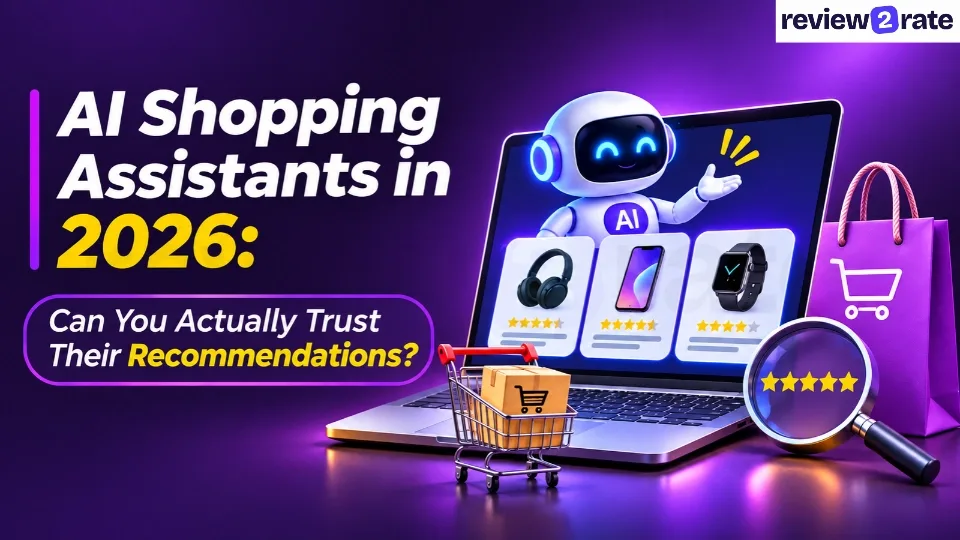
AI Shopping Assistants in 2026: Can You Actually Trust Their Recommendations?
Imagine opening an AI chatbot and typing, "Find me the best smartphone under Rs. 30,000 with excellent battery life, a good camera and reliable after-sales service." Within seconds, you receive a neatly organised list of smartphones, specifications, prices, advantages, disadvantages and shopping links.
No more opening twenty browser tabs. No more watching hours of comparison videos. No more scrolling through hundreds of confusing customer reviews.
It sounds like the perfect shopping experience. But there is one important question that many consumers are forgetting to ask:
Is artificial intelligence actually recommending the best product for you, or simply presenting the most convincing answer based on the information it can access?
In 2026, AI shopping assistants are changing how consumers discover products, compare brands, understand specifications and decide what to purchase. Platforms such as ChatGPT and Google's Gemini-powered shopping experiences can make buying decisions easier, but convenience does not automatically guarantee accuracy, independence or reliability.
At Review2Rate, we believe that technology should help people make informed decisions, while genuine customer experiences remain an essential part of the buying process.
This guide explores the advantages of AI-powered shopping, the risks consumers should understand and a practical verification method that can help you avoid expensive purchasing mistakes.
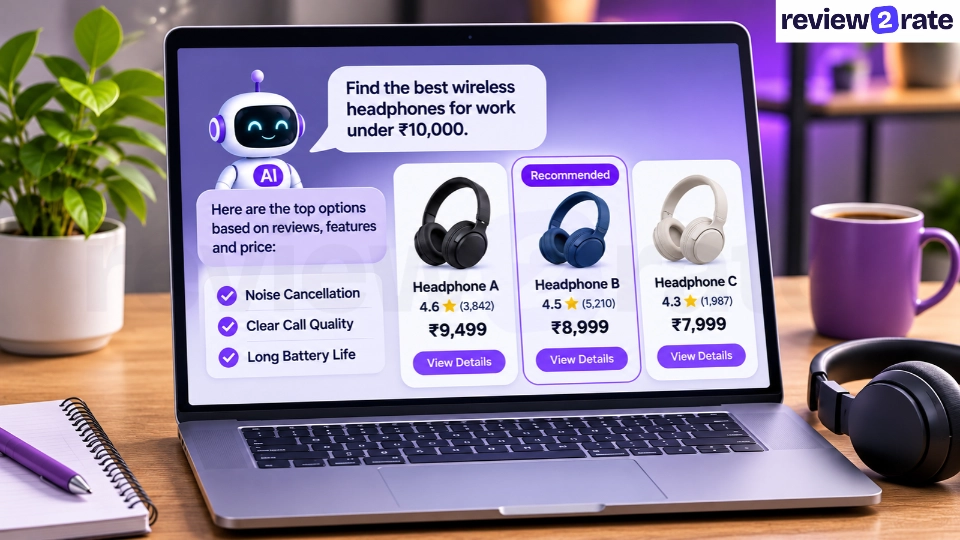
What Are AI Shopping Assistants?
AI shopping assistants are artificial intelligence-powered tools designed to help consumers research, discover, compare and sometimes purchase products through natural conversation.
Instead of searching for individual keywords, shoppers can describe their requirements in everyday language.
For example, you could ask:
- Which laptop is suitable for a college student under Rs. 60,000?
- Find wireless headphones with good noise cancellation for office calls.
- Compare two washing machines based on electricity consumption and maintenance costs.
- Which smartphone has a reliable camera for photographing moving children?
- Find a comfortable office chair for someone working eight hours a day.
- What are the most common complaints about this particular smartwatch?
The assistant interprets your requirements and attempts to organise available information into a useful response.
Depending on the platform and its capabilities, this information may come from product catalogues, retailer listings, manufacturer websites, online articles, customer reviews, previous conversation context and other accessible sources.
The result can feel like speaking with a personal shopping adviser rather than using a conventional search engine.
Why AI Shopping Is Becoming Popular in 2026
Online shopping has become increasingly complicated. Consumers often face thousands of nearly identical products, conflicting reviews, promotional claims, constantly changing prices and confusing specifications.
A customer researching wireless earbuds might encounter dozens of articles claiming to identify the best model. Each article may recommend different products, and some may contain affiliate links or sponsored placements.
AI assistants attempt to reduce this information overload by presenting a more manageable shortlist.
In April 2026, Google announced upgraded shopping capabilities within AI Mode in India, including conversational shopping assistance and product comparison tables incorporating review insights.
Meanwhile, ChatGPT's shopping experiences can help users discover products, explore relevant details and find merchant links.
These developments show that artificial intelligence is moving beyond answering general questions. It is becoming part of the consumer purchasing journey.
However, the ability to simplify information should not be confused with the ability to guarantee that all information is correct.
How AI Shopping Assistants Work
Although different platforms use different technologies, many AI shopping experiences follow a general process.
- Understanding your request: The assistant identifies your budget, preferences, product category and intended use.
- Finding relevant information: It may retrieve data from accessible websites, product feeds, catalogues and other sources.
- Comparing available options: It attempts to evaluate products against your requirements.
- Generating a recommendation: It presents a shortlist, explanation, comparison or suggested product.
- Supporting the next step: Depending on the platform, it may provide shopping links or additional purchasing assistance.
This process can be extremely useful. However, every stage introduces potential limitations.
If the original request is unclear, the product data is outdated or the available reviews are misleading, the final recommendation may also be unreliable.
An AI shopping recommendation is only as useful as its underlying information, interpretation and ability to recognise uncertainty.
AI Shopping vs Traditional Online Shopping
| Feature | Traditional Online Shopping | AI-Assisted Shopping |
|---|---|---|
| Product Discovery | Search keywords and browse listings manually | Describe requirements conversationally |
| Product Comparison | Open multiple pages and compare specifications | Receive an organised comparison |
| Customer Reviews | Read individual customer experiences | May receive summaries of available reviews |
| Personalisation | Search filters and browsing history | Recommendations based on stated requirements and available context |
| Research Time | Can require substantial manual effort | Can reduce initial research time |
| Price Accuracy | Can check live retailer prices directly | Depends on the freshness of accessible information |
| Commercial Influence | Advertisements and promoted listings | May vary according to the platform, source material and sponsorship model |
| Final Decision | Made by the consumer | Should remain under the consumer's control |
Neither approach is perfect. Traditional shopping requires more effort, while AI-assisted shopping introduces additional questions about data accuracy and recommendation transparency.
Combining the strengths of both approaches can be more effective than relying exclusively on either one.
7 Genuine Benefits of Using AI Shopping Assistants
Despite the risks, artificial intelligence offers meaningful advantages when used correctly.
Here are seven ways AI can improve your shopping experience.
1. Faster product research
AI can help identify suitable product categories, explain unfamiliar terminology and create an initial shortlist without requiring hours of browsing.
For someone buying their first laptop, camera, television or washing machine, this can make a complicated purchase easier to understand.
2. Better understanding of technical specifications
Many buyers struggle to understand terms such as LTPO OLED, variable refresh rate, optical zoom, active noise cancellation, inverter compressors and different processor configurations.
AI can translate these technical specifications into practical explanations.
For example, instead of simply telling you that a smartphone has a 120Hz display, an assistant can explain how a higher refresh rate affects scrolling and supported games.
3. Recommendations based on personal requirements
The best product for one person may not be the best product for another.
A gaming laptop, an office laptop and a student laptop serve different purposes. AI can help identify which features matter most for your particular needs.
Providing specific requirements can make recommendations more relevant than a generic search for the best product.
4. Easier product comparisons
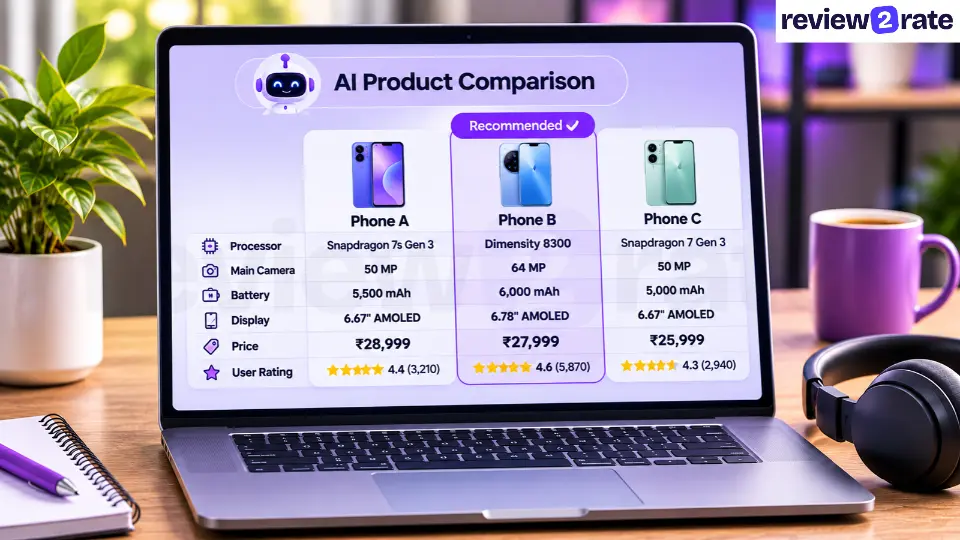
AI can organise several products into a comparison table covering price, specifications, features, advantages and limitations.
This can be useful when deciding between two similar smartphones or comparing an older flagship with a newer mid-range model.
5. Identifying questions you forgot to ask
Consumers often focus on advertised specifications and overlook maintenance, accessory costs, warranty coverage or long-term compatibility.
An AI assistant can suggest additional questions worth investigating before purchasing.
6. Helping avoid unnecessary spending
A well-framed AI shopping query can help determine whether an expensive feature is actually necessary.
For example, someone who mainly uses a tablet for reading and video streaming may not need the most powerful processor available.
7. Simplifying complex buying decisions
When products involve many technical considerations, AI can help organise priorities into essential features, optional features and unnecessary extras.
This is particularly helpful for electronics, home appliances, computer accessories and other specification-heavy categories.
Can You Actually Trust AI Product Recommendations?
The answer is neither a simple yes nor a simple no.
AI recommendations can be useful starting points, but they should not automatically be treated as verified purchasing advice.
A January 2026 Gartner survey involving 322 US consumers found that 54% of those who had used generative AI while shopping for a recent purchase reported needing to double-check all the information it provided.
The same research found that consumers were more comfortable allowing AI to narrow their choices than allowing it to make purchasing decisions independently.
These results describe a particular surveyed US population rather than all shoppers worldwide. Nevertheless, they illustrate an important distinction between finding AI helpful and trusting it completely.
The safest approach is to trust verified evidence, not simply the confidence with which an AI assistant presents an answer.
10 Hidden Risks of AI Shopping Recommendations
Before depending on an AI shopping assistant, consumers should understand where its recommendations can go wrong.
1. AI Can Provide Incorrect Product Specifications
Artificial intelligence can sometimes generate information that sounds convincing but is factually incorrect. This is commonly described as an AI hallucination.
In a shopping context, incorrect information could include:
- Claiming a smartphone supports wireless charging when it does not.
- Confusing the battery capacities of two similar models.
- Reporting the wrong laptop processor or graphics card.
- Claiming a television supports a particular gaming feature that is unavailable.
- Mixing the specifications of standard, Pro and Ultra variants.
- Recommending accessories that are incompatible with the selected device.
These mistakes may appear small, but they can lead to expensive purchasing decisions.
What you should do: Verify all essential specifications using the manufacturer's official product page, manual or technical documentation.
2. Recommended Prices May Be Outdated
Product prices change constantly due to discounts, stock availability, promotional campaigns, seller competition and regional differences.
An AI assistant may discover a price that was accurate yesterday but is no longer available.
It might also confuse a bank-discount price with the regular selling price or include an exchange bonus that you cannot use.
For Indian consumers, this distinction can be particularly important during festive sales and major e-commerce events.
Illustrative example: An AI assistant recommends a smartphone for Rs. 24,999. After opening the retailer's page, you discover that the actual price is Rs. 29,999 and the lower advertised amount requires an eligible credit card and an old-phone exchange.
The recommendation may technically reflect an advertised offer, but it does not represent the price every customer can obtain.
What you should do: Check the final payable amount, delivery charges, discount eligibility and seller terms before purchasing.
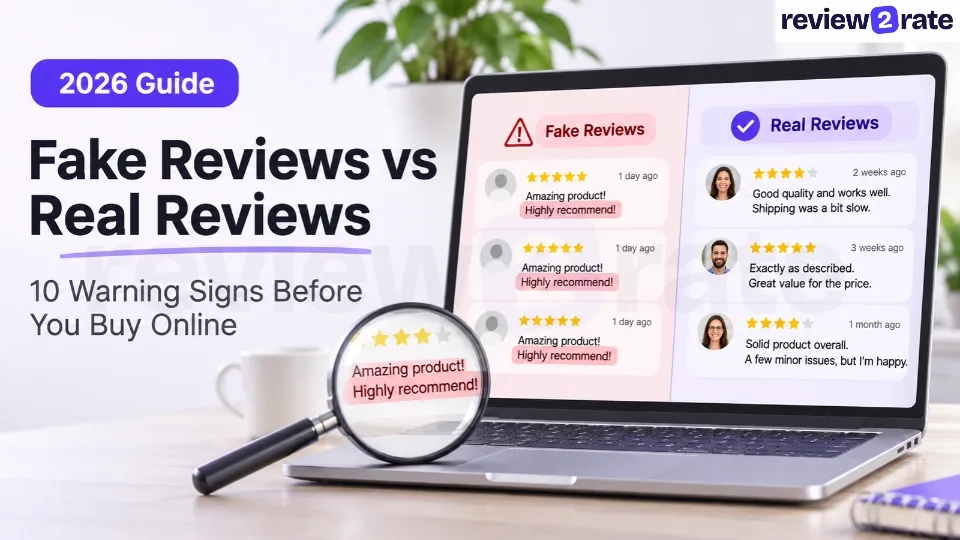
3. AI Can Repeat Fake or Manipulated Reviews
AI systems may use online customer reviews as part of their product research. However, not every online review represents an authentic customer experience.
Some reviews may be incentivised, copied, generated artificially or submitted by people who have never used the product.
If an AI assistant relies on unreliable reviews, its summary can repeat misleading claims without recognising their original source.
For example, a product might have hundreds of generic five-star comments praising its quality, while detailed customer reviews describe repeated durability problems.
An AI summary may fail to give sufficient attention to those less common but more informative complaints.
Consumers should also remember that AI can misinterpret legitimate reviews without any deliberate manipulation being involved.
What you should do: Read detailed customer reviews yourself, especially those describing actual usage, ownership duration, limitations and after-sales experiences.
Our earlier guide explains how to recognise suspicious feedback: Fake Reviews vs Real Reviews in 2026: 10 Warning Signs Before You Buy Anything Online.
4. Popular Products May Receive More Attention Than Better Alternatives
Large and established brands often have extensive online coverage, product listings, professional reviews and marketing material.
A smaller brand may offer a suitable alternative but have limited information available online.
Depending on the assistant's data sources and retrieval methods, products with stronger online visibility may receive more attention.
This does not necessarily mean that an assistant deliberately favours a brand. It may simply have more accessible evidence about that brand.
Popularity and product suitability are not always the same thing.
What you should do: Ask the assistant to include alternatives from different brands and explain why each option meets your specific requirements.
5. Commercial Influence May Not Always Be Obvious
Online shopping has long involved advertisements, affiliate commissions, retailer partnerships and promoted products.
AI shopping platforms can have different business models and rules governing how products and merchants are presented.
Some experiences may include separately labelled advertising or sponsored placements. Others may generate recommendations using sources that themselves contain commercial incentives.
For example, a product comparison website might earn money when readers purchase through its affiliate links.
Even when an AI-generated answer is not sponsored, the information it retrieves may come from commercially influenced sources.
This does not mean every affiliate review is dishonest or every AI recommendation is paid advertising. It means consumers should understand where information comes from.
What you should do: Check sponsorship disclosures, examine the original sources and compare recommendations with independent reviews.
6. AI May Not Understand Your Actual Personal Preferences
There is no universally perfect smartphone, television, headphone, mattress or office chair.
Two people can purchase exactly the same product and have completely different experiences.
For example, one person may prefer headphones with powerful bass, while another wants balanced audio and greater vocal clarity.
A smartphone with a large display may be excellent for watching videos but uncomfortable for someone who prefers compact devices.
AI can analyse stated preferences, but it cannot directly experience how a product feels to you.
What you should do: Identify your personal priorities and, where practical, physically try products involving comfort, fit, ergonomics or subjective preferences.
7. Long-Term Reliability Is Difficult to Predict
Many product recommendations focus heavily on launch specifications, initial reviews and headline features.
However, a product's real value often becomes clearer after weeks or months of ownership.
Consider problems such as:
- Battery degradation after extended use.
- Headphone ear cushions becoming uncomfortable or damaged.
- Software updates introducing unexpected problems.
- Appliance spare parts becoming difficult to find.
- Smartwatch straps or charging connectors wearing out.
- Customer support taking weeks to resolve a complaint.
These issues may not appear in early product reviews or manufacturer specifications.
For newly launched products, meaningful long-term reliability information might not exist yet.
What you should do: Search for ownership experiences that describe several months of use, and treat long-term predictions about newly launched products as uncertain.
8. Regional Product Variants Can Create Confusion
Manufacturers sometimes sell products with different specifications, accessories, software features or warranties in different countries.
A smartphone sold in the United States may differ from the Indian version. A laptop available overseas may have a processor or storage configuration that is unavailable locally.
AI assistants may unintentionally combine information from multiple markets.
Indian buyers should pay particular attention to:
- Official Indian retail pricing.
- Exact model number and product variant.
- Indian 5G network compatibility.
- Local warranty coverage.
- Power adapter and voltage compatibility.
- Regional software feature availability.
- Availability of authorised repair centres.
- Imported product warranty restrictions.
What you should do: Specify India in your shopping query and verify the exact model using official Indian product documentation.
9. AI Recommendations Can Change When You Rephrase the Question
You may receive different recommendations from the same assistant when changing a few words in your request.
For example:
- What is the best smartphone under Rs. 40,000?
- Which smartphone offers the best value under Rs. 40,000?
- Which smartphone under Rs. 40,000 has the fewest serious customer complaints?
These questions appear similar, but each emphasises a different purchasing priority.
Even questions with nearly identical meanings can sometimes produce different results because of changes in retrieved information or model behaviour.
A 2026 research report titled Agentic Shopping is Complicated and Contingent examined how variations in the search process can influence language-model product recommendations.
This reinforces the importance of understanding the criteria behind a recommendation rather than accepting its ranking automatically.
What you should do: Ask why a product was selected, what evidence supports the choice and which alternative would be preferable under different requirements.
10. Shopping Links May Lead to Unreliable Sellers
Finding a suitable product is only half of the purchasing process. Finding a trustworthy seller is equally important.
In November 2026, reporting by The Verge highlighted research in which AI-generated shopping responses sometimes directed users towards risky websites, including websites impersonating legitimate retailers.
The findings do not establish that every AI shopping link is unsafe, but they demonstrate that AI-generated links should not automatically be considered verified or secure.
Potential risks include:
- Counterfeit products.
- Fake retail websites.
- Misleading domain names.
- Unavailable customer support.
- Unauthorised sellers.
- Unclear return and refund policies.
- Products without applicable warranty coverage.
What you should do: Independently confirm the retailer's identity, domain name, reputation and return policy before submitting payment information.
Why AI Review Summaries Cannot Replace Real Customer Reviews
AI-generated review summaries can save time, especially when a product has thousands of customer comments.
However, summarisation involves selecting which information appears most important. In doing so, valuable details can be lost.
Consider the following hypothetical example.
An AI assistant summarises customer feedback for wireless headphones:
"Customers generally appreciate the sound quality, comfortable design and battery performance, although some users report minor connectivity issues."
This sounds reassuring. But individual customer reviews might reveal additional context:
- A user experiences repeated Bluetooth disconnections during office meetings.
- Another customer reports ear discomfort after wearing the headphones for three hours.
- A long-term owner notices declining battery performance after several months.
- A customer is satisfied with the product but reports poor warranty service.
The AI summary may technically mention the most common themes while failing to communicate how serious a particular limitation could be for an individual buyer.
Someone purchasing headphones primarily for professional video calls would probably consider repeated connection problems more important than excellent bass performance.
This is why context matters more than a simple positive or negative summary.
AI Shopping Recommendations vs Genuine Customer Reviews
| Factor | AI Recommendations | Genuine Customer Reviews |
|---|---|---|
| Research Speed | Can organise information quickly | Requires reading individual experiences |
| Firsthand Experience | Does not personally use products | Can describe actual ownership and usage |
| Technical Explanation | Can simplify complex specifications | Depends on the reviewer's knowledge |
| Comfort and Usability | Interprets available descriptions | Can report direct personal experiences |
| Long-Term Reliability | Depends on existing information | Can reveal problems appearing over time |
| Individual Preferences | Uses stated requirements and available context | Shows how different people experience a product |
| Potential Bias | May reflect source coverage and system limitations | May reflect individual preferences or commercial incentives |
| Best Use | Discovery, explanation and comparison | Evaluating real-world ownership experiences |
Neither AI-generated information nor individual customer reviews should be accepted without critical thinking.
Customer reviews can also contain errors, personal bias or exaggerated claims. The goal is to combine different forms of evidence rather than replacing one imperfect source with another.
The 5-Star Trap: Why Ratings Alone Are Not Enough
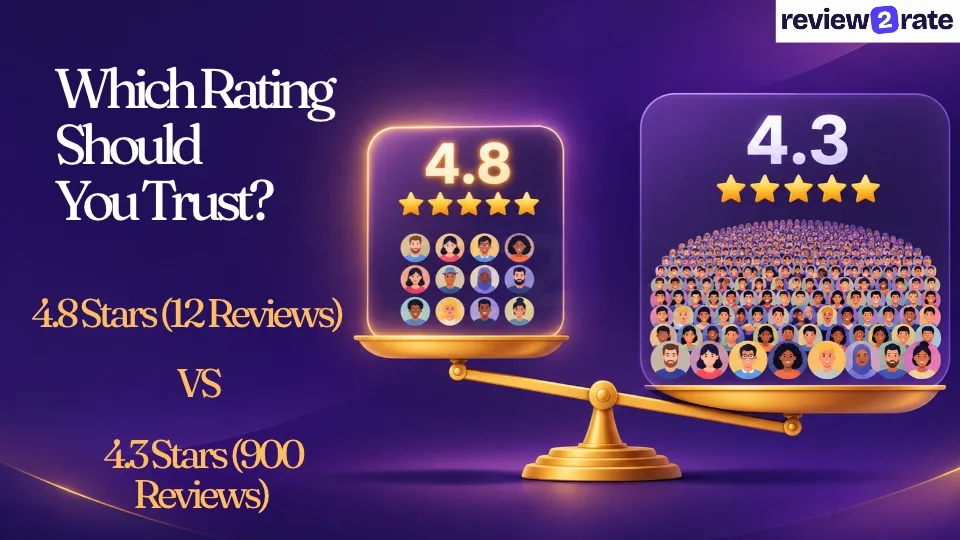
Imagine two products with the following ratings.
| Factor | Product A | Product B |
|---|---|---|
| Average Rating | 4.9 out of 5 | 4.3 out of 5 |
| Number of Reviews | 27 | 1,850 |
| Review Detail | Mostly short comments | Mixed, detailed ownership experiences |
| Long-Term Feedback | Limited | Available from several owners |
| Price | Rs. 5,999 | Rs. 4,499 |
These figures are hypothetical and are provided only to illustrate how ratings can be interpreted.
Product A has the higher average rating, but Product B has substantially more feedback and more detailed ownership experiences.
This does not prove that Product B is better. It simply demonstrates why a numerical rating should not be considered in isolation.
Review count, review quality, product age, recurring complaints and your individual requirements all matter.
When AI recommends a highly rated product, ask what evidence exists beyond the average star rating.
Where AI Shopping Assistants Are Most Useful
AI can be particularly helpful when the purchasing decision involves clearly defined requirements and easily verifiable specifications.
| Product Category | Useful AI Assistance | What You Should Verify Yourself |
|---|---|---|
| Smartphones | Comparing processors, cameras and software support | Actual battery life, heating, camera samples and local service |
| Laptops | Understanding hardware and selecting configurations | Sustained performance, keyboard comfort, thermals and exact model |
| Headphones and Earbuds | Explaining ANC, codecs and battery specifications | Comfort, sound preference, microphone quality and connection stability |
| Televisions | Explaining display technology and connectivity | Picture quality, viewing angles and actual room suitability |
| Home Appliances | Comparing capacity, energy ratings and features | Installation costs, maintenance, warranty and repair service |
| Cars | Comparing dimensions, features and published specifications | Test-drive experience, real-world running costs and safety evidence |
| Clothing and Footwear | Finding styles, colours and size guides | Actual fit, fabric quality, comfort and return eligibility |
| Online Services | Comparing plans, prices and advertised features | Customer support, billing conditions and cancellation policies |
The more subjective, expensive or safety-sensitive the purchase, the more important independent verification becomes.
A Practical Example: Buying a Smartphone Under Rs. 30,000
Suppose you are looking for a smartphone with reliable battery life, good photography, long software support and dependable service in India.
You ask an AI shopping assistant for recommendations, and it presents three fictional product options.
| Feature | Phone A | Phone B | Phone C |
|---|---|---|---|
| Price | Rs. 29,999 | Rs. 26,999 | Rs. 24,999 |
| Battery | 6,500mAh | 5,500mAh | 6,000mAh |
| Main Selling Point | Battery capacity | Balanced hardware and longer software support | Lower purchase price |
| Potential Limitation | Large and heavy design | Smaller battery capacity | Less extensive software support |
These products and specifications are fictional examples, not real smartphone recommendations.
An assistant might recommend Phone A because it has the largest battery capacity.
However, battery capacity alone does not determine battery life. Processor efficiency, display technology, software optimisation and usage patterns also play important roles.
After reading independent tests and customer experiences, you might discover that Phone B provides sufficient battery life and offers a better balance of size, camera quality and software support.
Alternatively, Phone C might satisfy all your essential requirements while saving you several thousand rupees.
The correct choice depends on your requirements, not simply which product has the largest number in a specification table.
How to Ask AI for Better Shopping Recommendations
The quality of an AI recommendation can improve when your request clearly describes what you actually need.
A vague question often produces a vague answer.
Weak shopping prompt:
Tell me the best laptop.
This question provides no budget, location, usage requirements, preferred operating system or other essential information.
Better shopping prompt:
Recommend three laptops officially available in India under Rs. 60,000. I need one for office work, browsing, video meetings and occasional photo editing. Battery life, keyboard comfort and after-sales service are more important to me than gaming performance. Include current prices with source dates, exact model numbers, official specification links, common customer complaints and the disadvantages of each option. Clearly identify anything you cannot verify.
The second prompt gives the assistant a clearer set of priorities and asks it to distinguish confirmed information from uncertainty.
It also encourages a balanced comparison rather than a simple list of products.
10 Useful Prompts for Smarter AI Shopping
Try these questions before purchasing an AI-recommended product:
- What is the strongest reason not to purchase this product?
- Which cheaper alternative meets the same essential requirements?
- Are these specifications verified against the manufacturer's official website?
- Is this the exact model sold in India?
- Which claims are manufacturer-reported and which are independently tested?
- What problems do long-term owners repeatedly mention?
- When was this price last verified?
- Does the advertised price require a bank offer or exchange?
- Are there additional accessories, subscriptions or maintenance costs?
- What important information is missing or uncertain?
These prompts can help uncover weaknesses in an initial recommendation. However, an AI assistant's response to a verification question must still be checked against the underlying sources.
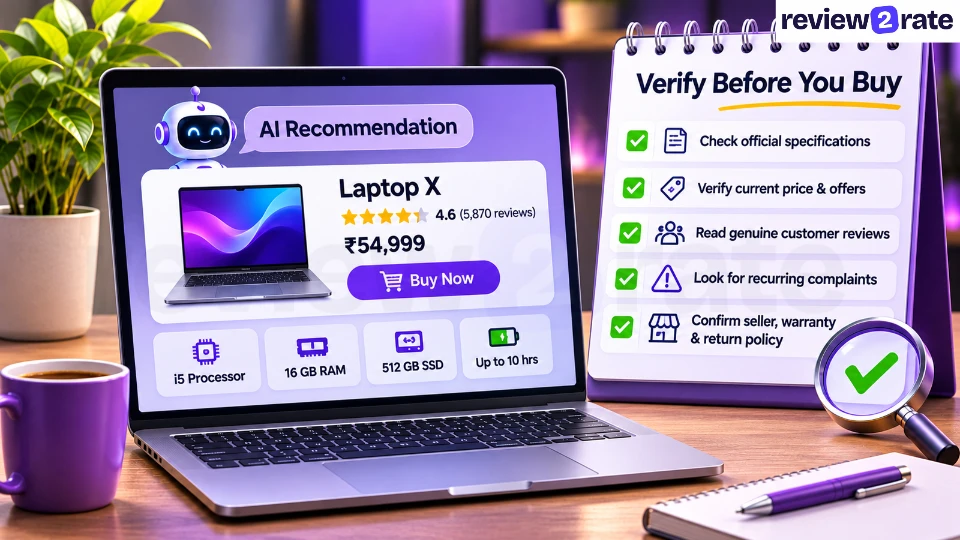
The Review2Rate 5-Minute AI Shopping Verification Method
You do not necessarily need to spend hours researching every product. A short verification process can help identify important warning signs before you purchase.
Review2Rate recommends the following five-step initial screening method.
Minute 1: Verify the product specifications
Open the manufacturer's official website and confirm that the recommended product actually includes the features you need.
Check the exact model number, storage configuration, battery capacity, compatibility and applicable software features.
Minute 2: Verify the price
Check the current selling price on the official store or reputable retailers.
Make sure the displayed amount does not depend on exchange offers, membership discounts or payment conditions that you cannot access.
Minute 3: Read genuine customer experiences
Look beyond the overall rating. Find detailed feedback describing how the product performs during everyday use.
Pay attention to ownership duration and whether the reviewer explains their specific experience.
Minute 4: Investigate recurring complaints
Search for problems mentioned repeatedly by different customers.
One negative review does not establish a widespread issue, but consistent reports of similar problems deserve further investigation.
Minute 5: Check the seller and purchase conditions
Confirm the retailer's identity, warranty coverage, return policy, delivery terms and final payable amount.
For expensive purchases, treat this five-minute check as an initial screening process rather than a complete investigation.
If the product passes all five checks, you have a more informed basis for deciding whether to purchase it.
The Review2Rate AI Recommendation Trust Score
To help consumers evaluate AI-generated shopping advice, we propose a simple editorial scoring framework called the AI Recommendation Trust Score.
This is not a scientifically validated accuracy rating or an automated testing result. It is a practical consumer checklist designed to encourage independent verification.
Give the recommendation up to 20 points in each of the following five categories.
| Category | What to Check | Maximum Points |
|---|---|---|
| Specification Accuracy | Essential features match the official product documentation | 20 |
| Price Accuracy | Current final payable price is verified | 20 |
| Customer Experience | Detailed and credible ownership feedback is available | 20 |
| Seller Reliability | Retailer identity, warranty and return conditions are confirmed | 20 |
| Personal Suitability | Product meets your actual requirements without unnecessary expense | 20 |
| Total | Maximum possible score | 100 |
For each category, award 20 points when evidence is strong, 10 points when information is incomplete and zero when evidence is missing or materially contradictory.
Use the following suggested interpretation:
- 90–100: Well-supported recommendation, provided no critical concerns remain.
- 70–89: Promising option that still requires additional checks.
- 50–69: Important information is missing. Investigate before purchasing.
- Below 50: Insufficient evidence to rely on the recommendation.
A high score does not guarantee that a product is safe, authentic or suitable. A serious safety concern, suspicious seller or essential compatibility problem should override the numerical score.
Interactive Thinking: Which Product Would You Buy?
Consider these two hypothetical recommendations.
| Trust Score Category | Product A | Product B |
|---|---|---|
| Specification Accuracy | 20 | 20 |
| Price Accuracy | 10 | 20 |
| Customer Experience | 10 | 20 |
| Seller Reliability | 10 | 20 |
| Personal Suitability | 20 | 20 |
| Total Trust Score | 70/100 | 100/100 |
Even if AI recommends Product A first, Product B may deserve greater consideration because its recommendation is supported by more complete evidence.
The objective is not to prove that AI is wrong. It is to make sure the final purchasing decision is based on information you can verify.
What Is Agentic Commerce?
Artificial intelligence is gradually moving beyond recommending products towards completing certain shopping-related tasks on behalf of users.
This emerging approach is often referred to as agentic commerce.
Depending on the platform and available permissions, an AI agent may be able to perform tasks such as:
- Searching for suitable products.
- Comparing offers from different merchants.
- Monitoring selected product information.
- Preparing shopping carts.
- Assisting with checkout.
- Supporting parts of the purchasing process.
These capabilities vary by country, platform, merchant and feature availability.
Agentic commerce could make online shopping more convenient, but it also introduces additional questions about spending limits, consent, payment security, product substitutions and responsibility when something goes wrong.
There is a major difference between allowing AI to identify a suitable product and allowing AI to spend your money.
Should You Allow AI to Make Purchases for You?
For many consumers, the safest approach is to keep final purchase approval under their own control.
An assistant might correctly identify a product but misunderstand the required colour, size, delivery date, warranty conditions or acceptable seller.
For inexpensive and familiar repeat purchases, automated assistance may be convenient when proper controls exist.
For expensive electronics, financial commitments, healthcare-related products or unfamiliar sellers, careful human review remains particularly important.
Before enabling purchasing automation, confirm:
- Whether the assistant requires approval before payment.
- The maximum permitted spending amount.
- Whether product substitutions are allowed.
- How payment information is handled.
- Who is responsible for cancellations and returns.
- Whether you can revoke purchasing permissions.
- How you can review completed transactions.
AI should not have unrestricted purchasing authority simply because its product recommendations appear helpful.
Privacy Risks When Using AI Shopping Tools
Personalisation can make recommendations more relevant, but consumers should consider what information they share with AI services.
For most product research, an assistant only needs general information such as your budget, country, preferred features and intended use.
You should generally avoid including unnecessary sensitive information, such as:
- Credit card numbers.
- UPI PINs.
- One-time passwords.
- Bank account credentials.
- Government identity document numbers.
- Private account passwords.
- Your complete home address when it is unnecessary.
- Confidential work or financial information.
Use official and trusted payment interfaces when completing purchases.
Review the privacy settings and data-handling policies of any shopping assistant before connecting personal accounts or allowing it to manage financial transactions.
How Indian Shoppers Should Use AI in 2026
India's online shopping ecosystem includes major e-commerce marketplaces, brand websites, local retailers, regional distributors and independent sellers.
AI can make it easier to compare these options, but recommendations must account for local purchasing conditions.
Indian consumers should pay special attention to:
- Whether the product is officially sold in India.
- Whether GST is included in the displayed price.
- Local manufacturer warranty coverage.
- Authorised service-centre availability.
- Delivery and installation charges.
- Payment method restrictions.
- Bank cashback and exchange conditions.
- Return and replacement policies.
- Availability of spare parts and consumables.
- Regional language support.
For example, an imported gadget may appear cheaper than the official Indian version. However, the absence of local warranty support could make it more expensive to own in the long term.
Similarly, a large home appliance may offer attractive specifications but be unsuitable if installation or repair services are unavailable in your location.
The best recommendation is not necessarily the cheapest product or the most powerful product. It is the product that provides the right balance of features, reliability, price and support for your circumstances.
What to Do If an AI Shopping Recommendation Goes Wrong
If you purchase a product based on incorrect information, document what happened.
Keep copies of the retailer's listing, product description, order confirmation, invoice, relevant communications and applicable return policy.
Contact the seller or marketplace through its official customer-support channel.
If you are an Indian consumer and a complaint remains unresolved, you can explore the available consumer grievance options through the official National Consumer Helpline.
If you suspect payment fraud, contact your bank or payment provider immediately and use India's official National Cyber Crime Reporting Portal.
An AI recommendation does not automatically establish a right to a refund. Applicable rights and remedies depend on the transaction, seller obligations, relevant consumer protections and circumstances of the complaint.
Why the Future of Shopping Still Needs Human Reviews
Artificial intelligence can analyse enormous amounts of information, organise specifications and explain complicated purchasing decisions.
But there is an important difference between describing a product and actually living with it.
AI does not personally wear headphones during a long flight.
It does not experience a smartphone overheating while recording video on a hot afternoon.
It does not discover that an office chair becomes uncomfortable after several hours of work.
It does not personally wait weeks for an appliance warranty repair.
Real customers can describe these experiences.
That is why genuine, detailed and honest reviews will remain valuable even as AI shopping technology becomes more advanced.
Useful reviews should explain what the customer purchased, how long they used it, what worked well, what disappointed them and whether they would recommend it to someone with similar needs.
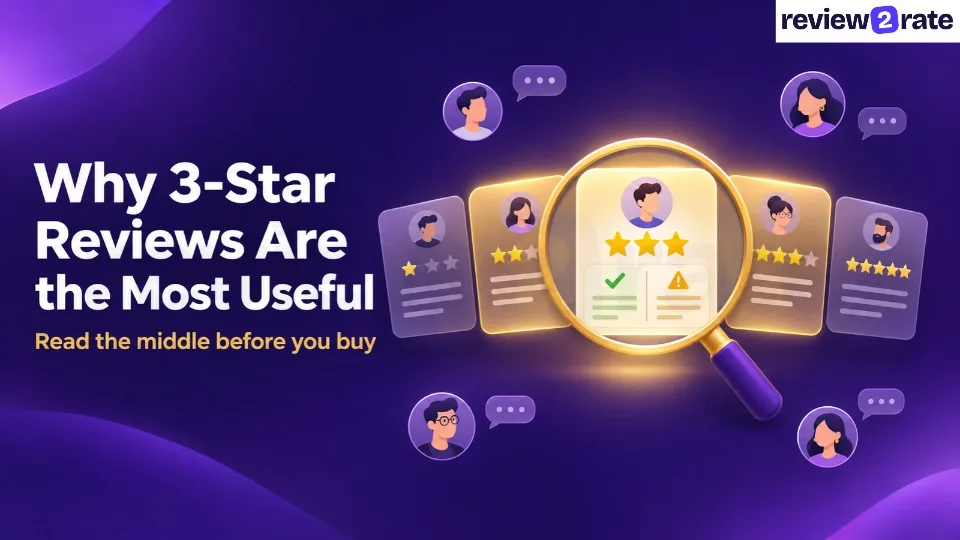
A balanced three-star or four-star review can sometimes provide more useful purchasing information than a generic five-star comment.
The purpose of a customer review is not to make every product appear perfect. It is to help the next customer understand what owning that product may actually involve.
The Best Shopping Formula for 2026
Instead of choosing between artificial intelligence and traditional customer research, combine both approaches.
Step 1: Use AI to discover.
Identify suitable products, understand technical terminology and create an initial shortlist.
Step 2: Use official information to verify.
Confirm specifications, compatibility, model numbers and warranty conditions.
Step 3: Use genuine reviews to understand.
Investigate actual customer experiences, recurring complaints, durability and after-sales service.
Step 4: Use your own judgement to decide.
Consider your requirements, available budget, personal preferences and willingness to accept compromises.
AI discovery + official verification + genuine customer reviews + personal judgement = a more informed buying decision.
Frequently Asked Questions About AI Shopping Assistants in 2026
1. Are AI shopping assistants reliable?
AI shopping assistants can be reliable for initial product discovery, technical explanations and comparisons. However, their recommendations should be verified because they may contain outdated information, incorrect specifications or unsuitable suggestions.
2. Can ChatGPT recommend products to buy?
Yes. ChatGPT can help users discover and compare products and, in supported shopping experiences, provide product information and merchant links. Users should verify details before purchasing.
3. Can Google Gemini help with online shopping?
Yes. Google's Gemini-powered experiences can assist with shopping research, product comparisons and related queries. Specific features depend on location, platform and availability.
4. Are AI-generated product reviews genuine customer reviews?
No. An AI-generated description is not a firsthand customer experience. AI may help a genuine customer organise their own feedback, but it should not invent ownership experiences or be presented as an authentic customer testimonial.
5. Can AI detect fake customer reviews?
AI may identify suspicious patterns such as repetitive language, inconsistent claims and unusual review behaviour. However, it cannot guarantee that an individual review is genuine or fake based solely on text.
6. Can AI find the cheapest product online?
AI can help discover available prices, but it may not have access to every retailer or current discount. Always check the actual payable amount on a trustworthy seller's website.
7. Can AI recommend the wrong smartphone or laptop?
Yes. An assistant may misunderstand your requirements, confuse model variants or use inaccurate information. Verify the exact model and essential specifications before purchasing.
8. Are AI shopping recommendations influenced by advertising?
Commercial influence varies by platform and data source. Some platforms may display separately identified sponsored content, while retrieved sources may contain affiliate links or other commercial incentives.
9. Can AI replace professional product reviewers?
AI can summarise and compare available information, but it cannot replace the firsthand testing, measurements and direct product experiences offered by qualified independent reviewers.
10. Should I trust AI-generated review summaries?
Use them as an overview, not as your only source of customer feedback. Read individual reviews to understand recurring complaints, personal preferences and the context behind reported experiences.
11. Are AI shopping assistants safe to use in India?
They can be useful for Indian consumers when used carefully. Verify local product variants, prices, warranty coverage, payment conditions and seller identity before purchasing.
12. Can AI help me avoid overspending?
Yes. A clearly written shopping request can help identify unnecessary features and suitable lower-cost alternatives. However, AI may also recommend premium products if your budget and priorities are not clearly stated.
13. What is the biggest risk of AI shopping?
One of the biggest risks is accepting a confident recommendation without verifying its accuracy, supporting evidence and suitability for your needs.
14. What information should I avoid sharing with an AI shopping assistant?
Avoid sharing unnecessary sensitive information such as payment credentials, passwords, one-time passwords, UPI PINs and personal identity document numbers.
15. What is the best way to use AI before purchasing a product?
Use AI to shortlist and compare options. Verify essential information through official sources, read genuine customer experiences, confirm current pricing and make the final decision yourself.
Research and Further Reading
The following sources provide additional information about AI shopping developments, consumer trust and recommendation reliability:
- Google India: New ways Google is using AI to make shopping easier, April 2026.
- OpenAI Help Center: Shopping with ChatGPT Search.
- Gartner: Consumers want AI shopping help, but not AI purchase decisions, May 2026.
- Research Report 6: Agentic Shopping is Complicated and Contingent, August 2026.
- The Verge: AI chatbots are recommending fake retail websites, study finds, November 2026.
Editorial note: AI shopping features, merchant integrations, prices and regional availability can change over time. The hypothetical products, examples and Review2Rate scoring framework in this article are educational illustrations rather than independently tested product recommendations.
Final Verdict: Should You Trust AI Shopping Assistants in 2026?
Artificial intelligence is transforming online shopping by making product discovery faster, technical comparisons easier and purchasing research more accessible.
It can help you understand complicated specifications, identify suitable alternatives and avoid paying for features you do not need.
However, AI recommendations are not automatically accurate, unbiased, complete or suitable for every consumer.
Incorrect specifications, outdated prices, misleading source material, regional differences and unreliable sellers can still create purchasing problems.
The smartest shoppers will not necessarily be the people who use AI the most. They will be the people who know when AI is useful, when its recommendations require verification and when to make decisions independently.
Use AI as your research assistant, not your unquestionable shopping authority.
Before purchasing anything recommended by artificial intelligence, verify the facts, read genuine customer experiences and decide whether the product actually meets your needs.
Remember, AI can recommend a product in seconds, but you are the person who will spend the money, use the product and deal with the consequences of the purchase.
Have You Ever Purchased Something Recommended by AI?
Did an AI shopping assistant help you discover an excellent product? Or did its recommendation turn out to be disappointing after you made the purchase?
Your experience could help another shopper make a better decision.
Visit Review2Rate.com to explore product information, share your genuine experiences and contribute honest feedback about the products and services you have actually used.
Whether your experience was excellent, average or disappointing, an authentic review can provide valuable information that specifications and AI-generated summaries may overlook.
Review2Rate – Real Reviews. Real Experiences. For the People, By the People.
Used something we wrote about?
Add your own score. Every review earns points toward this month's prize.
Write a review