Why You Should Read 1-Star Reviews Before Buying a 5-Star Product
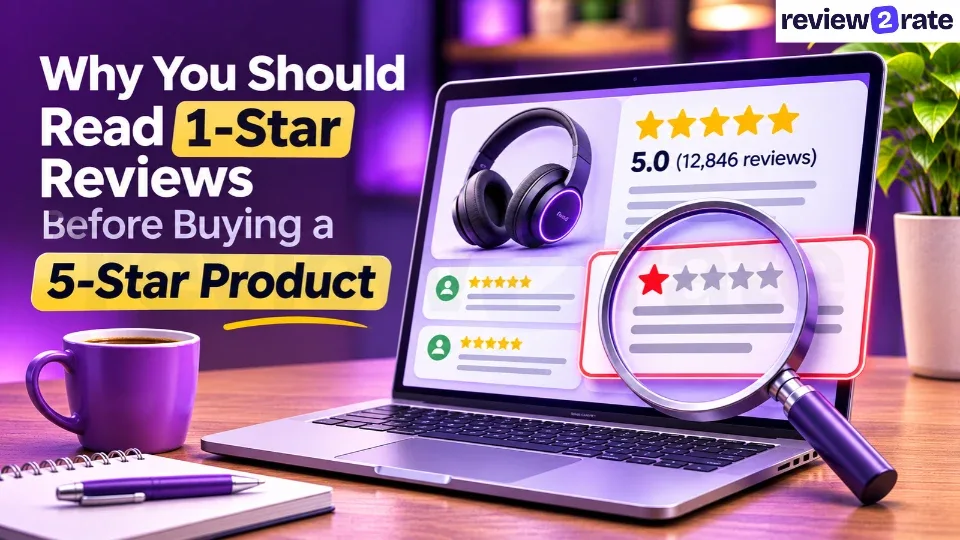
Imagine finding a product online with an almost perfect five-star rating, hundreds of positive customer reviews, attractive photographs and a tempting price. Everything seems right. You add it to your shopping cart, complete the payment and eagerly wait for delivery.
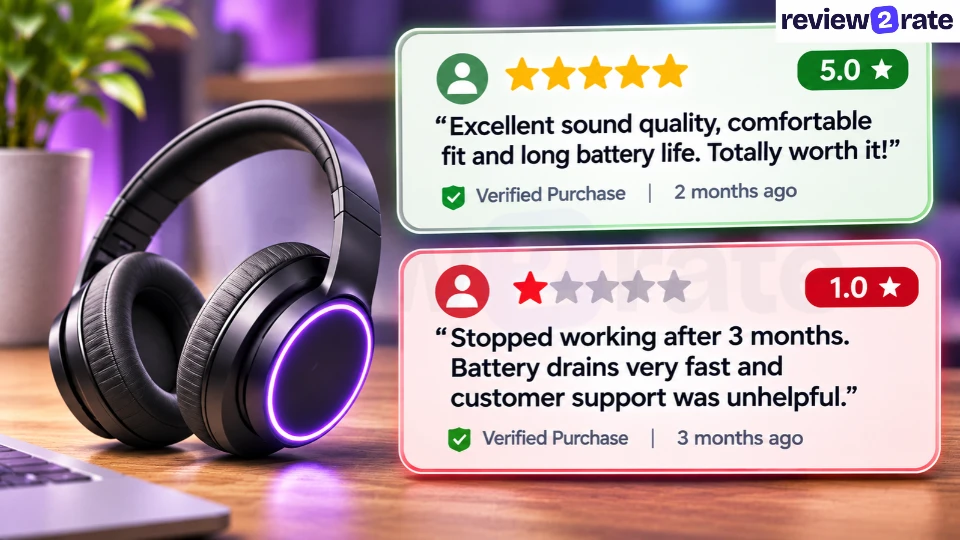
A few days later, the product arrives. Initially, everything looks fine. But after a couple of weeks, problems begin to appear. The battery does not last as long as expected, the build quality feels disappointing, or customer support becomes difficult to contact.
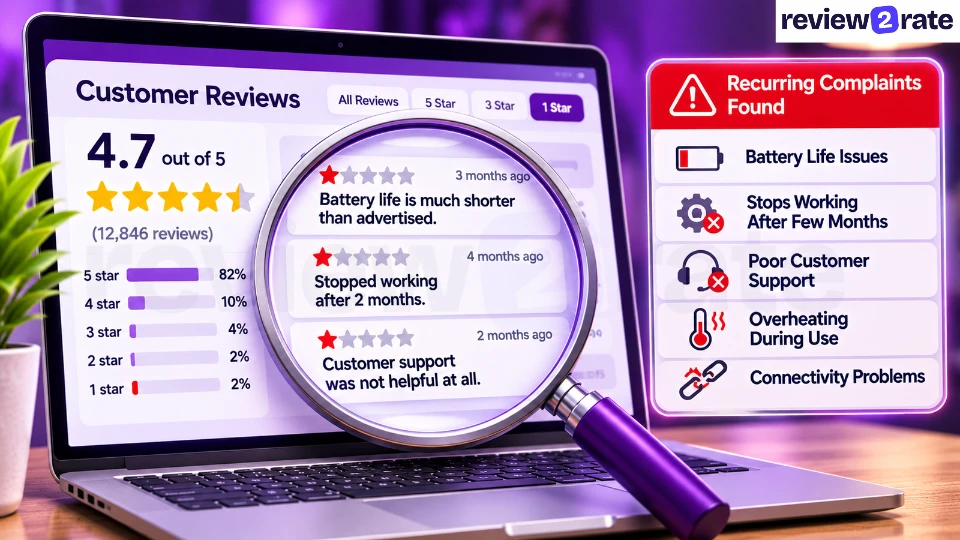
You return to the product page and finally open the one-star reviews.
Surprisingly, several customers have already described the exact problem you are experiencing.
The warning signs were available before you purchased the product. You simply did not know where to look.
In 2026, when online shopping platforms are filled with attractive product listings, influencer recommendations, AI-generated review summaries and impressive star ratings, learning how to interpret negative customer feedback has become an important consumer skill.
A high average rating can indicate that many customers are satisfied, but it cannot guarantee that a product is suitable for everyone.
At Review2Rate, we believe that every genuine experience matters, whether it comes from a satisfied five-star customer, an average three-star customer or a disappointed one-star customer.
This detailed guide explains why you should read negative reviews before buying highly rated products, how to identify meaningful complaints, when to ignore misleading criticism and how to make better purchasing decisions without becoming unnecessarily suspicious of every product.
The Problem With Judging Products by Star Ratings Alone
Online star ratings are designed to simplify purchasing decisions.
Instead of reading hundreds of individual customer experiences, shoppers can quickly look at a numerical score and form an initial impression.
A product rated 4.9 out of 5 may appear excellent. A product rated 3.2 may appear unreliable. A product rated 2.1 may be ignored entirely.
However, a star rating compresses many different experiences into a single number.
It does not automatically tell you:
- How long customers have used the product.
- Whether the reviewers purchased the same product variant.
- What customers were expecting before making the purchase.
- Whether the product has recurring technical problems.
- How the manufacturer handles warranty complaints.
- Whether the reviews are recent or outdated.
- Whether the product has changed since earlier reviews were published.
- Whether reviews were submitted voluntarily or following an incentive.
- Whether individual complaints are relevant to your requirements.
- Whether the displayed rating accurately represents all customer experiences.
Two products with identical average ratings can offer substantially different experiences.
One might perform consistently well across most situations, while another might satisfy casual users but disappoint customers with more demanding requirements.
A star rating tells you how customers rated a product. The written reviews help explain why.
What Does a 5-Star Rating Actually Mean?
A five-star rating generally indicates that a reviewer was highly satisfied with their experience.
However, the reasons behind that satisfaction can vary considerably.
One customer might award five stars because the product arrived quickly. Another might be impressed by its appearance. Someone else may consider it excellent value for money despite several limitations.
A customer who has used a smartphone for two days might give it five stars because the screen looks attractive and applications open quickly.
Another customer who has used the same smartphone for six months might give it three stars because battery performance has declined or software problems have appeared.
Both experiences could be genuine.
The difference lies in ownership duration, expectations and individual usage.
A five-star review does not necessarily mean that a product has no flaws. It means that the reviewer considered their experience worthy of five stars.
What Does a 1-Star Rating Actually Mean?
A one-star rating usually indicates significant dissatisfaction.
However, that dissatisfaction may originate from the product itself, the seller, delivery experience, customer support or a misunderstanding about how the product works.
Common reasons for one-star ratings include:
- A defective product arriving in the package.
- Performance failing to meet advertised expectations.
- Unexpected technical problems.
- Poor battery life or charging issues.
- Uncomfortable design or incorrect sizing.
- Missing accessories or damaged packaging.
- Difficulty obtaining a refund or replacement.
- Unhelpful customer support.
- Compatibility problems with existing devices.
- Frustration with software updates.
- Unrealistic expectations about a particular feature.
- Problems caused by improper installation or usage.
Not every one-star review indicates a defective product. Some describe legitimate purchasing problems that are unrelated to its underlying quality.
Understanding the reason behind the rating is therefore more important than the rating itself.
Why Negative Reviews Can Make a Product Listing More Trustworthy
Research from Northwestern University's Medill Spiegel Research Center has examined how online reviews influence consumer purchasing decisions.
The research suggests that negative feedback can contribute to the credibility of a product's overall review profile.
This may seem surprising, but a collection of reviews that includes strengths, weaknesses and different experiences can give consumers a more realistic understanding of what they are considering.
Very positive reviews can still be genuine, and an excellent product may naturally receive very few complaints.
However, the presence of balanced feedback allows shoppers to understand potential compromises before spending their money.
A company that allows customers to publish legitimate criticism and responds constructively to complaints can provide useful information about its approach to customer service.
Consumers should not assume that the absence of negative reviews automatically proves manipulation. Instead, they should consider the product's age, number of reviews, review policies and available independent evidence.
10 Reasons to Read 1-Star Reviews Before Buying Anything Online
Negative reviews can reveal information that is difficult to discover through product descriptions, advertisements and short positive comments.
Here are ten reasons why checking them should become part of your regular shopping routine.
1. Negative Reviews Can Reveal Hidden Product Flaws
Product descriptions generally focus on features and selling points.
A smartphone advertisement might emphasise its large battery, powerful processor and advanced camera system. A headphone listing might highlight noise cancellation, sound quality and premium materials.
These specifications can be useful, but they do not necessarily reveal how the product behaves under demanding everyday conditions.
Negative reviews may describe problems such as:
- Smartphones becoming warm during extended camera recording.
- Headphones disconnecting during important calls.
- Laptop fans becoming distracting under normal workloads.
- Appliances developing unusual noises after several months.
- Wireless accessories struggling to maintain stable connections.
- Furniture developing loose components after repeated use.
Such experiences are not automatically evidence of widespread defects. Nevertheless, they can identify questions worth investigating before making a purchase.
When the same issue appears across multiple detailed and independent reviews, it deserves closer attention.
2. They Help You Identify Recurring Complaints
Every manufactured product can experience occasional defects.
Finding one negative review about a broken charging port does not necessarily mean that all units of that product have unreliable charging ports.
However, discovering numerous independent reviews describing a similar failure may indicate a pattern worth investigating.
For example, if several customers report that a pair of wireless earbuds begins experiencing charging problems after approximately three months, you should examine whether additional evidence supports that concern.
Look for similarities in:
- The exact problem described.
- How long the product was used before the issue appeared.
- The affected model or variant.
- The purchase dates of the reviewers.
- The conditions under which the problem occurred.
- Whether customer support offered a successful resolution.
Repeated complaints are more informative than isolated statements, provided the reviews are credible and genuinely independent.
3. They Reveal the Difference Between Specifications and Real-World Performance
A specification sheet describes what a product contains or is designed to achieve. Customer feedback describes what people experience when using it.
A laptop may advertise up to 15 hours of battery life, but actual runtime could vary considerably depending on brightness, video calls, application usage and power settings.
A smartphone may contain a high-resolution camera, but resolution alone does not determine photographic quality.
A smartwatch may advertise advanced fitness features, but users could experience difficulties with its application, comfort or connectivity.
Negative reviews can highlight the conditions under which a product struggles.
The useful question is not simply whether the advertised specification is impressive, but whether the product performs adequately in situations that matter to you.
4. They Help You Understand Long-Term Reliability
Many customers publish positive reviews shortly after receiving a product.
Early impressions are valuable for evaluating design, initial performance, packaging and setup.
However, durability and long-term reliability can be difficult to assess during the first few days of ownership.
Consider the following hypothetical situations:
- A pair of shoes feels comfortable initially but develops sole damage after four months.
- A wireless mouse works perfectly for several weeks before its buttons become inconsistent.
- A smartphone delivers strong battery life initially but develops unexpected problems after a software update.
- A kitchen appliance performs well during occasional use but struggles under regular heavy use.
Reviews written after months of ownership may reveal experiences that early reviewers could not have observed.
Look for ownership details in both positive and negative reviews. A detailed five-star review from someone who has used a product for a year can be equally valuable.
5. They Can Expose After-Sales Service Problems
The purchasing experience does not end when a product arrives.
For electronics, appliances, vehicles and other expensive purchases, warranty support and repair availability can be just as important as product features.
Negative reviews may describe difficulties such as:
- Long waiting periods for replacement parts.
- Confusing warranty conditions.
- Repeated customer-support communications.
- Unexpected repair charges.
- Limited authorised service-centre availability.
- Delays in arranging installations or replacements.
- Problems obtaining refunds.
These experiences are particularly relevant when buying products that are expensive to repair or difficult to replace.
For Indian consumers, local service-centre availability can be an important buying consideration, especially outside major cities.
A product may offer excellent specifications, but inadequate local support could significantly affect its overall value.
6. They Help You Discover Compatibility Issues
Not every product works equally well with every device, operating system or environment.
Wireless headphones may support certain audio codecs only on compatible smartphones. A smart-home accessory may require a particular wireless network. A printer may lack support for an older operating system.
Negative reviews can reveal compatibility limitations that are not immediately obvious from marketing material.
Examples include:
- Smartwatch features that work differently on Android and iOS.
- USB-C accessories that require particular power or data standards.
- Gaming controllers that do not support specific platforms.
- Smart appliances requiring particular application or network configurations.
- Imported electronics with regional warranty or power-supply restrictions.
These problems may not indicate poor product quality. They may simply show that the product is unsuitable for a particular customer's requirements.
Reading such experiences can help you avoid purchasing something incompatible with your existing equipment.
7. They Help You Recognise Misleading Expectations
Marketing language often describes products using terms such as premium, professional-grade, ultra-fast, intelligent or revolutionary.
These descriptions can create expectations that are not always aligned with the product's actual capabilities.
For example, a budget camera advertised as professional-quality may satisfy casual users but disappoint experienced photographers.
A low-priced office chair marketed as ergonomic may provide basic adjustability without the extensive support offered by specialised alternatives.
Negative customer feedback can help identify the difference between promotional language and practical usability.
However, consumers must also maintain realistic expectations for the price category and intended purpose of a product.
8. They Can Help You Avoid Unexpected Ownership Costs
The displayed purchase price is not always the complete cost of owning a product.
Additional expenses may include:
- Separate charging adapters.
- Replacement batteries.
- Subscription-based software features.
- Installation charges.
- Maintenance requirements.
- Replacement filters or cartridges.
- Protective accessories.
- Proprietary cables or consumables.
- Out-of-warranty repair charges.
Negative reviews may mention these expenses because customers discovered them only after completing their purchases.
For example, a low-priced printer could require relatively expensive replacement ink. An affordable security camera might require a paid subscription for certain cloud recording functions.
Checking these issues beforehand can help you evaluate the total cost of ownership rather than focusing exclusively on the initial purchase price.
9. They Help You Find Products That Suit Your Personal Needs
The best product for another customer may not be the best product for you.
Someone might award a smartphone five stars because of its large screen, while another customer dislikes its size and weight.
A bass-heavy headphone may receive excellent reviews from music enthusiasts who enjoy powerful low frequencies, while other listeners prefer a more balanced sound.
A firm mattress might be uncomfortable for one customer but ideal for another.
Negative reviews can provide useful information about subjective preferences.
Instead of asking whether a product has any negative reviews, ask whether the problems described would affect your personal experience.
Sometimes a negative review may even identify a feature that you would prefer.
10. They Encourage More Balanced Purchasing Decisions
When shoppers encounter an attractive product with overwhelmingly positive ratings, they may become emotionally committed to the idea of purchasing it.
Once that happens, they may pay more attention to information supporting their decision and overlook evidence suggesting that another option could be better.
This tendency is commonly associated with confirmation bias.
Deliberately examining negative reviews can introduce a different perspective.
It gives you an opportunity to reconsider your priorities, compare alternatives and decide whether the product's limitations are acceptable.
The goal is not to discourage yourself from buying anything. It is to make sure that you understand what you are buying before spending your money.
Positive Reviews vs Negative Reviews – What Can Each Tell You?
| Factor | Positive Reviews | Negative Reviews |
|---|---|---|
| Main Purpose | Explain what satisfied customers | Explain what disappointed customers |
| Product Strengths | Often highlight successful features | May acknowledge strengths despite problems |
| Product Weaknesses | May mention minor compromises | May describe significant limitations |
| Long-Term Reliability | Can demonstrate lasting satisfaction | Can reveal problems appearing over time |
| Customer Support | Can describe successful assistance | Can reveal unresolved complaints |
| Personal Preferences | Show what customers enjoyed | Show what customers found unsuitable |
| Potential Bias | May contain exaggerated praise | May contain exaggerated criticism |
| Buying Value | Help identify potential benefits | Help identify potential risks |
Neither category should automatically be considered more truthful.
A responsible shopping decision combines information from positive, negative and moderate reviews with official specifications and independent evidence.
The Psychology Behind Why We Ignore Negative Reviews
Consumers do not always approach purchasing decisions with complete objectivity.
Attractive product photographs, discounts, brand familiarity and positive reviews can make a product feel appealing before we have investigated its limitations.
Several common psychological tendencies can influence this process.
Confirmation Bias: Once you decide that a product looks excellent, you may pay more attention to reviews supporting your existing opinion.
Social Proof: Seeing thousands of positive ratings can make you feel more comfortable purchasing something that other people appear to enjoy.
The Halo Effect: A strong impression of a brand or a particular feature can influence how you perceive unrelated aspects of the product.
Fear of Missing Out: Limited-time discounts and stock messages may encourage you to purchase before completing your research.
Anchoring: The first rating, price or recommendation you encounter may influence how you evaluate subsequent information.
Negative reviews can counter some of these tendencies by encouraging consumers to consider alternative outcomes.
However, negative feedback can also create its own bias. A particularly dramatic complaint might influence your perception more than its actual relevance deserves.
The objective is to evaluate evidence proportionately rather than allowing either praise or criticism to dominate your judgement.
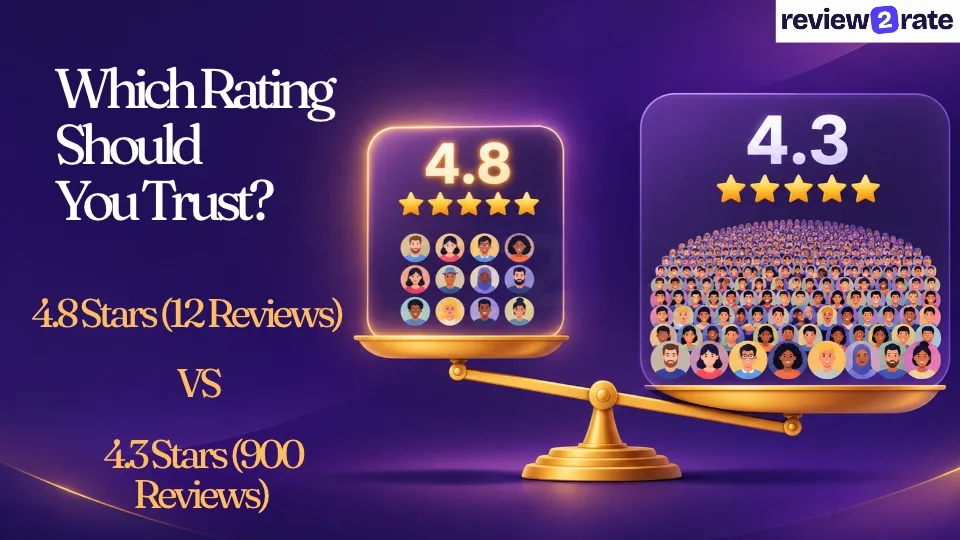
Why a 4.3-Star Product Could Be a Better Choice Than a 4.9-Star Product
Consider two hypothetical wireless headphone listings.
| Comparison | Headphone A | Headphone B |
|---|---|---|
| Average Rating | 4.9 out of 5 | 4.3 out of 5 |
| Number of Reviews | 50 | 2,000 |
| Price | Rs. 7,999 | Rs. 6,499 |
| Positive Feedback | Attractive design and sound | Comfort, sound and stable connectivity |
| Negative Feedback | Some reports of call disconnections | Some users dislike the bass levels |
| Long-Term Ownership Reviews | Limited | Available from multiple owners |
| Warranty Experiences | Limited information | Mixed but documented experiences |
These products, ratings, prices and customer feedback summaries are fictional examples created for educational purposes.
At first glance, Headphone A may appear to be the better product because it has a significantly higher average rating.
However, if you need headphones primarily for professional video meetings, reports of connection problems could be particularly important.
Headphone B's complaints about bass levels might be less relevant to your requirements.
Its lower price and larger collection of ownership experiences may make it a more attractive option after further verification.
This does not establish that Headphone B is objectively superior. It demonstrates why product suitability cannot be determined by star ratings alone.
Understanding the Mathematics Behind Product Ratings
A simple average rating is calculated by adding individual star ratings together and dividing the total by the number of ratings.
However, some online platforms may use additional weighting, verification, filtering or other calculation methods.
Consider a hypothetical product with the following rating distribution:
| Star Rating | Number of Customers | Total Rating Points |
|---|---|---|
| 5 Stars | 850 | 4,250 |
| 4 Stars | 80 | 320 |
| 3 Stars | 20 | 60 |
| 2 Stars | 20 | 40 |
| 1 Star | 30 | 30 |
| Total | 1,000 | 4,700 |
The simple average rating would be:
4,700 divided by 1,000 = 4.7 out of 5 stars.
This is an impressive average rating, and the large majority of reviewers appear satisfied.
However, the product also received 30 one-star reviews and 20 two-star reviews.
If the one-star reviews describe unrelated complaints, they may not significantly affect your purchasing decision.
But if many of them independently describe the same important technical problem, you may want to investigate further.
Also remember that 30 one-star reviews out of 1,000 ratings does not establish a 3% product defect rate.
Not every purchaser submits a review, some reviews may be inaccurate, and the people who choose to review a product may not represent all customers.
Review statistics are useful indicators, not complete reliability measurements.
The Number of Reviews Matters, But Quality Matters Too
A product with thousands of reviews may provide more information than a product with only a handful of ratings.
However, a large number of reviews does not automatically guarantee authenticity or reliability.
Consider the difference between the following two comments.
Worst product. Don't buy.
And:
I used these headphones for approximately four months. The sound quality was good, but the left side started disconnecting during calls. I tested them with two different phones and experienced the same problem. Customer support offered a replacement, but the process took longer than I expected.
Both comments are illustrative examples, not actual customer testimonials.
The second example provides substantially more useful information because it describes ownership duration, the specific issue, troubleshooting and the service experience.
Detailed reviews allow shoppers to evaluate whether a complaint is relevant to their own circumstances.
When reading product feedback, look beyond the number of reviews and consider how much meaningful information they contain.
Not All 1-Star Reviews Are Worth Taking Seriously
Negative feedback can be useful, but it can also be misleading, irrelevant or exaggerated.
Consumers should avoid making purchasing decisions based entirely on the most dramatic complaint they encounter.
Here are several types of negative reviews that require additional context.
1. Delivery-Related Complaints
A customer may give a product one star because it arrived late or the courier damaged the package.
These complaints are relevant to the purchasing experience but do not necessarily establish a problem with the product's design or performance.
They may be more useful when evaluating a specific seller or delivery service.
2. Reviews Written Before Using the Product
A rating submitted immediately after delivery may focus on packaging, appearance or initial setup.
Such a review can be genuine, but it may provide limited information about durability and long-term performance.
3. Complaints Based on Unrealistic Expectations
A customer purchasing an inexpensive smartphone might expect it to perform like a premium gaming flagship.
Their dissatisfaction may be understandable from their perspective, but the comparison might not be appropriate for the product's price and intended purpose.
4. Problems Caused by Incorrect Usage
Some complaints may result from incorrect installation, incompatible accessories or misunderstanding the product's instructions.
Before treating these experiences as evidence of poor quality, check the manufacturer's documentation and whether similar problems have been reported under correct usage conditions.
5. Complaints About Personal Preferences
A review describing headphones as too bass-heavy, a mattress as too firm or a smartphone as too large may reflect individual preferences.
These reviews can still be useful, but their relevance depends on what you personally prefer.
6. Suspicious or Manipulated Negative Reviews
Just as positive reviews can be fabricated, negative reviews can also be manipulated.
The US Federal Trade Commission advises consumers to consider where reviews come from and warns that fake negative feedback may be used to damage competitors.
Warning signs can include repeated wording across different accounts, vague accusations, unusual bursts of reviews and criticism containing little product-specific information.
None of these signs alone proves that a particular review is fake.
Use them as reasons to investigate rather than reasons to accuse an individual or business of dishonesty.
For more guidance, read our detailed article: Fake Reviews vs Real Reviews in 2026: 10 Warning Signs Before You Buy Anything Online.
How to Identify a Useful Negative Customer Review
The most useful negative reviews generally provide enough context for another shopper to understand what happened.
Look for the following characteristics:
- The exact product model or variant is identified.
- The reviewer describes how they used the product.
- The approximate ownership duration is mentioned.
- The problem is explained clearly.
- The circumstances surrounding the problem are described.
- The reviewer explains any troubleshooting attempts.
- Relevant photographs or videos are provided where appropriate.
- The reviewer mentions whether the seller or manufacturer resolved the issue.
- The complaint is relevant to the product's intended use.
- The reviewer distinguishes personal preferences from technical problems.
These characteristics can make feedback more informative, but they do not independently prove authenticity.
When possible, compare the review with independent customer experiences and reliable product information.
Product Complaint or Seller Complaint? Know the Difference
One of the biggest mistakes shoppers make when reading negative reviews is assuming that every complaint concerns the product itself.
In reality, many different problems can affect a purchasing experience.
| Example Complaint | Likely Complaint Category | What to Investigate |
|---|---|---|
| Product stopped working after normal use | Product reliability | Recurring failures and warranty options |
| Wrong colour arrived | Order fulfilment | Seller accuracy and replacement policy |
| Package arrived damaged | Packaging or delivery | Seller packaging and delivery handling |
| Battery lasts less than expected | Performance or expectations | Independent testing and usage conditions |
| Refund took several weeks | After-sales service | Seller and marketplace refund procedures |
| Headphones feel uncomfortable | Fit or ergonomics | Headphone dimensions and personal preferences |
| Product appears different from its description | Listing accuracy | Exact model, seller and official specifications |
| Accessory does not connect to my device | Compatibility | Supported devices and technical requirements |
Sometimes multiple categories overlap. A damaged product could result from poor manufacturing, inadequate packaging or careless transport.
Understanding these distinctions can prevent you from rejecting a suitable product because of a problem associated with a particular seller.
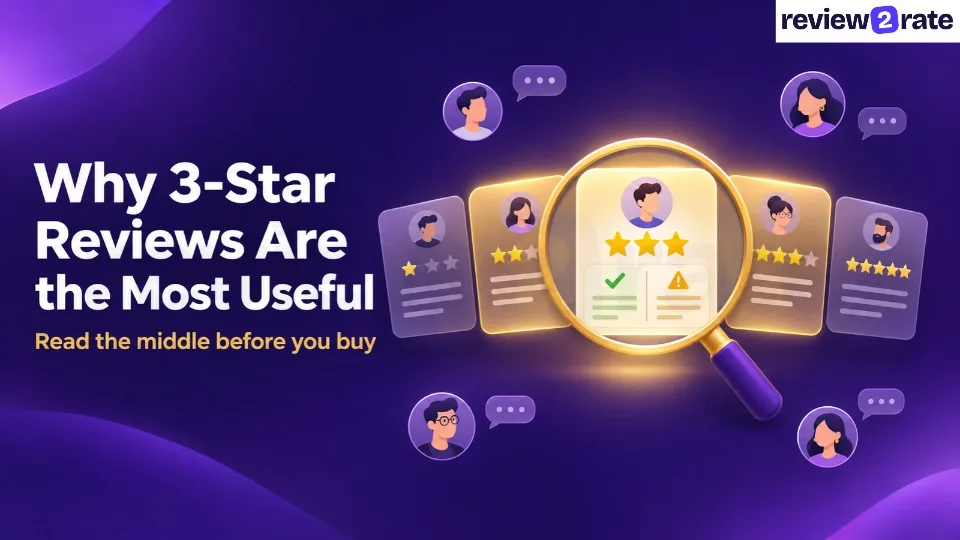
Why 3-Star Reviews Deserve Your Attention Too
Although this article focuses on one-star reviews, moderate ratings can be extremely valuable.
Three-star reviews often describe a mixture of positive and negative experiences.
A customer might appreciate a smartphone's camera while expressing disappointment with its charging speed. Another customer may like a laptop's performance but find its keyboard uncomfortable.
These balanced experiences can help shoppers understand the trade-offs involved in owning a product.
A three-star rating may reflect genuine satisfaction with certain features and dissatisfaction with others.
When researching a purchase, read across the complete rating distribution rather than limiting yourself to the highest and lowest scores.
Five-star reviews can explain why people love a product. One-star reviews can reveal potential problems. Three-star reviews can help you understand the compromises between them.
What to Look for in Negative Reviews Across Different Product Categories
Different products require different purchasing considerations.
A minor software issue may be acceptable in an inexpensive gadget, whereas a significant safety concern in an electrical appliance deserves immediate attention.
| Product Category | Important Complaints to Investigate |
|---|---|
| Smartphones | Battery degradation, overheating, connectivity, software bugs and service support |
| Laptops | Hinge durability, thermal performance, charging, display problems and keyboard reliability |
| Headphones and Earbuds | Comfort, connectivity, charging problems, microphone performance and battery wear |
| Smartwatches | Sensor consistency, application compatibility, battery life and strap durability |
| Televisions | Display defects, operating system responsiveness, connectivity and warranty support |
| Home Appliances | Installation problems, repair costs, noise, leakage, spare parts and durability |
| Clothing | Incorrect sizing, fabric quality, colour changes and stitching problems |
| Footwear | Comfort, sizing consistency, sole durability and material quality |
| Furniture | Structural stability, assembly difficulties, material quality and long-term comfort |
| Cars and Motorcycles | Recurring mechanical concerns, service costs, comfort and dealership experiences |
| Video Games | Technical stability, gameplay preferences, online connectivity and monetisation practices |
| Online Services | Unexpected charges, cancellation difficulties, privacy concerns and customer support |
| Hotels and Restaurants | Cleanliness, service consistency, accessibility and pricing transparency |
Focus on complaints that could affect your intended use, financial commitment or safety.
For serious safety concerns, consult official product recalls, regulator notices and manufacturer guidance rather than relying solely on customer reviews.
Should You Avoid a Product Because of a Single 1-Star Review?
In most situations, a single negative review is not sufficient evidence to reject an otherwise suitable product.
Individual manufacturing defects, unusual circumstances, misunderstandings and personal preferences can produce negative experiences even when most customers are satisfied.
However, the seriousness of a complaint matters.
A report that a product's colour looks different from its photographs is not equivalent to a credible report of an electrical safety problem.
Serious complaints should be investigated using appropriate independent or official information, even if only one review initially brings the issue to your attention.
The important distinction is between treating a review as a warning worth checking and treating it as definitive proof.
How Recent Reviews Can Change Your Buying Decision
Products and services can change over time.
A smartphone may receive software updates that resolve earlier problems or introduce new issues. A manufacturer may revise components. A retailer may change its fulfilment processes or customer-support policies.
Older reviews can still be relevant, particularly when discussing long-term durability.
However, recent reviews may better reflect the current version of a product or service.
When researching a purchase:
- Check when the product was originally released.
- Read recent positive and negative reviews.
- Compare current complaints with older ones.
- Look for official software updates or product revisions.
- Investigate whether previously reported problems have been addressed.
- Confirm that the reviews refer to the same version you intend to purchase.
Do not assume that an issue reported several years ago still exists. Equally, do not assume that it has been resolved simply because the product continues to receive positive ratings.
What Verified Purchase Labels Can and Cannot Tell You
Some shopping platforms display verified purchase labels next to customer reviews.
These labels can provide useful context because they indicate that the platform has associated the review with a qualifying transaction under its own verification process.
However, a verified purchase label does not guarantee that every statement in the review is accurate, independent or representative of other customers.
It also does not necessarily establish how long the reviewer used the product.
A non-verified review can still contain genuine information, particularly if a customer purchased the product elsewhere.
Consider verification status alongside review detail, relevance, supporting evidence and independent confirmation.
How Brands Respond to Negative Reviews Can Be Revealing
Reading a customer complaint is useful, but examining the company's response can provide additional context.
A constructive response may acknowledge the concern, explain relevant warranty procedures and offer appropriate assistance.
Useful responses generally focus on understanding the customer's situation and resolving the problem rather than arguing about the rating.
When evaluating responses, consider:
- Whether the company acknowledges the specific issue.
- Whether it provides a practical next step.
- Whether the response respects the customer's experience.
- Whether follow-up information indicates that the problem was resolved.
- Whether similar unresolved complaints continue to appear.
A polished response does not prove that a company successfully resolved the complaint, and the absence of a public reply does not prove that no assistance was provided privately.
Nevertheless, documented resolutions can offer helpful information about the after-sales experience.
AI Review Summaries vs Reading Actual 1-Star Reviews
In 2026, artificial intelligence can help shoppers summarise product reviews and organise common advantages and disadvantages.
This can reduce research time, but automated summaries may not preserve every important detail.
For example, an AI summary might describe a pair of headphones as having occasional connectivity issues.
Individual reviews could reveal that these problems occur primarily during video meetings, when connecting multiple devices or after installing a particular software update.
Such context could be extremely important for someone purchasing headphones specifically for professional calls.
AI summaries should therefore be treated as an introduction to customer feedback rather than a replacement for reading it.
For a deeper understanding of AI-powered shopping, read our guide: AI Shopping Assistants in 2026: Can You Actually Trust Their Recommendations?.
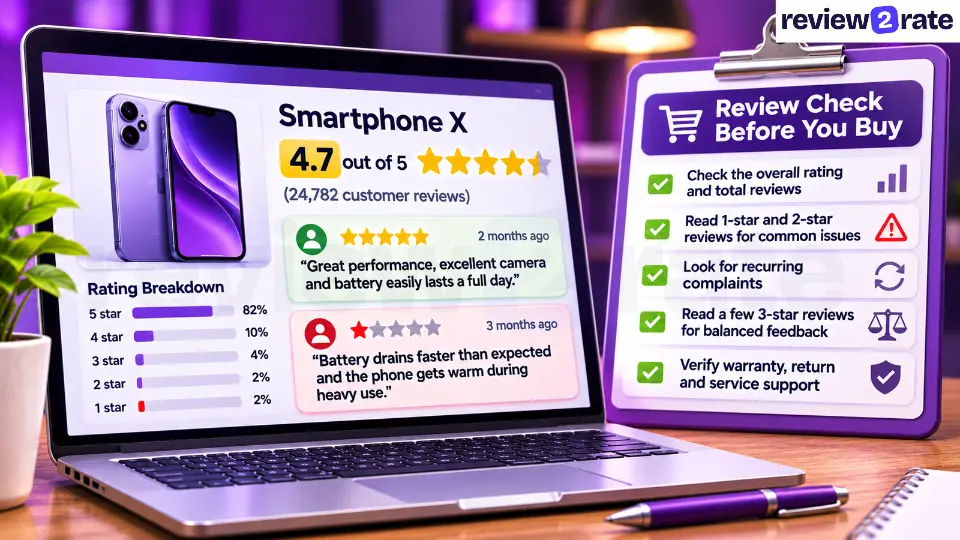
The Review2Rate 5-Minute Review Checking Method
You do not need to spend several hours researching every routine purchase.
A structured five-minute check can help identify potential concerns before you decide whether further investigation is necessary.
Minute 1: Examine the overall rating distribution.
Check the average rating, total review count and distribution of positive, moderate and negative ratings.
Do not judge the product by its average score alone.
Minute 2: Read recent 1-star and 2-star reviews.
Identify the most important complaints and determine whether they concern product quality, delivery, customer support or personal preferences.
Minute 3: Look for recurring problems.
Check whether independent reviewers repeatedly describe similar issues. Consider ownership duration and whether the complaints concern the exact model you intend to purchase.
Minute 4: Read 3-star and detailed positive reviews.
Understand the product's strengths and compromises. Look for long-term ownership experiences and information relevant to your intended use.
Minute 5: Verify the important details.
Check official specifications, current pricing, seller reputation, warranty coverage and applicable return policies.
If a serious problem remains unclear, continue researching instead of rushing to complete the purchase.
For expensive or safety-sensitive products, this method should serve as an initial screening process rather than a substitute for thorough research.
The Review2Rate Negative Review Risk Score
To help shoppers evaluate negative feedback consistently, we propose a simple editorial framework called the Negative Review Risk Score.
This is a consumer decision-making checklist, not a scientifically validated scoring system or an estimate of a product's actual failure rate.
Assign zero, ten or twenty points to each of the following five categories.
| Risk Category | What to Evaluate | Maximum Risk Points |
|---|---|---|
| Complaint Frequency | Whether similar problems repeatedly appear across credible reviews | 20 |
| Problem Severity | Whether the issue seriously affects normal use | 20 |
| Long-Term Reliability | Whether credible ownership experiences identify recurring durability problems | 20 |
| After-Sales Support | Whether customers face significant unresolved warranty or repair problems | 20 |
| Personal Relevance | Whether the reported limitations affect your specific requirements | 20 |
| Total Risk Score | Maximum possible points | 100 |
For each category, use the following suggested scoring approach:
- 0 points: Available evidence provides no meaningful indication of concern.
- 10 points: Some credible concerns are present, but their impact or frequency remains unclear.
- 20 points: Available evidence supports a significant concern relevant to that category.
If there is insufficient information to evaluate a category, mark it as unknown instead of automatically assigning zero.
When all five categories can be evaluated, use this suggested interpretation:
- 0–20 points: Lower observed concern. Available reviews reveal relatively few issues relevant to your requirements.
- 30–40 points: Moderate concern. Investigate the identified limitations and consider alternatives.
- 50–70 points: Elevated concern. Additional research is advisable before purchasing.
- 80–100 points: High concern. Multiple significant issues warrant careful reconsideration.
If any category remains unknown, treat the assessment as incomplete rather than interpreting a low total as evidence of reliability.
Serious safety concerns, suspected counterfeit products and essential compatibility problems should override the numerical score.
Practical Example – Two Products With Similar Ratings
Imagine comparing two fictional smartwatches that both receive an average rating of 4.7 stars.
| Risk Category | Smartwatch A | Smartwatch B |
|---|---|---|
| Complaint Frequency | 20 | 10 |
| Problem Severity | 20 | 10 |
| Long-Term Reliability | 20 | 0 |
| After-Sales Support | 10 | 0 |
| Personal Relevance | 10 | 10 |
| Total Risk Score | 80/100 | 30/100 |
This comparison uses fictional products and illustrative scores. It is not based on actual smartwatch testing or customer ratings.
In this hypothetical situation, Smartwatch A has more significant concerns across the available feedback, while Smartwatch B has several limitations that require further consideration.
Both products have identical average ratings, but their complaint profiles are different.
Understanding those differences could help you make a decision that better reflects your personal requirements.
10 Questions to Ask Before Trusting a Highly Rated Product
- Does the product have enough detailed reviews to support an informed decision?
- Are the reviews for the exact model or variant I intend to purchase?
- What are the most common complaints?
- Are those complaints isolated or recurring?
- How serious are the reported problems?
- Would the complaints affect my intended use?
- What do customers report after several months of ownership?
- Has the manufacturer addressed previously reported problems?
- Are local warranty, repair and return options acceptable?
- Does independent evidence support the product's advertised claims?
If you can answer these questions confidently, you are in a stronger position to decide whether the product is worth purchasing.
When Should Negative Reviews Make You Reconsider a Purchase?
Not every product limitation is a deal-breaker.
A smartphone with relatively slow charging may still be an excellent choice for someone who charges it overnight. A large laptop may be suitable for someone who rarely travels.
However, certain concerns deserve additional attention:
- Repeated and credible reports of essential functions failing.
- Documented safety concerns or official recall notices.
- Significant compatibility problems affecting your devices.
- Evidence that the seller is misrepresenting the product.
- Recurring unresolved warranty complaints.
- Unexpected recurring costs that exceed your budget.
- Limitations that directly conflict with your main reason for buying.
For example, if your main reason for purchasing wireless headphones is reliable communication during office meetings, recurring microphone or connectivity complaints may be more important than positive reviews praising music playback.
Buy according to your own priorities rather than someone else's rating.
How Indian Shoppers Can Benefit From Reading Negative Reviews
Indian consumers purchase products through major online marketplaces, official brand websites, independent sellers and local retailers.
The overall buying experience can differ depending on location, seller policies and available service infrastructure.
Before completing a purchase, Indian shoppers should consider:
- Whether the product is intended for the Indian market.
- Availability of authorised service centres nearby.
- Whether the seller provides a valid purchase invoice.
- Local manufacturer warranty conditions.
- Installation and delivery charges.
- Regional mobile network or electrical compatibility.
- Availability and cost of spare parts.
- Return, replacement and refund procedures.
- Additional accessory or subscription costs.
Negative feedback from customers in similar locations or circumstances may provide particularly relevant information.
However, always confirm important purchasing conditions directly with the seller or manufacturer because policies and service availability can change.
India's Framework for Trustworthy Online Consumer Reviews
Recognising the importance of genuine customer feedback, India's Department of Consumer Affairs and the Bureau of Indian Standards introduced IS 19000:2022, a standard concerning the collection, moderation and publication of online consumer reviews.
The framework addresses principles and processes intended to improve the reliability and integrity of online review systems.
Its introduction reflects the broader importance of protecting consumers from fake and deceptive feedback in e-commerce.
The existence of a review standard does not mean that every published online review is automatically authentic.
Consumers should continue evaluating individual experiences, checking independent information and reporting suspicious activity through appropriate platform channels.
Further information is available through the Government of India's announcement regarding the online consumer reviews framework.
What to Do If You Discover Problems After Buying a Product
Even careful research cannot eliminate every purchasing risk.
If you receive a defective, unsuitable or incorrectly described product, take the following steps:
- Document the problem using appropriate photographs, videos or written descriptions.
- Keep your purchase invoice and order confirmation.
- Check the applicable return and warranty terms.
- Contact the retailer or manufacturer's official support channel.
- Maintain records of relevant communications and service requests.
- Follow reasonable troubleshooting instructions where safe and appropriate.
- Consider available consumer grievance options if the matter remains unresolved.
Indian consumers can explore assistance through the official National Consumer Helpline.
Do not continue using a product that appears to pose a serious electrical, fire or other safety risk. Follow official safety guidance and contact the appropriate manufacturer or authority.
How to Write a Useful 1-Star Review Yourself
If you have a disappointing product experience, your feedback can help other consumers understand potential problems.
However, a useful negative review should focus on what actually happened rather than personal attacks or unsupported accusations.
When writing your review, consider including:
- The exact product or service you purchased.
- How long you used it.
- What initially attracted you to the product.
- What worked as expected.
- The specific issue you experienced.
- When and under what conditions the problem occurred.
- Any reasonable troubleshooting you attempted.
- How the seller or manufacturer responded.
- Whether the issue was resolved.
- Why you selected your final rating.
Avoid exaggerating your experience or making claims you cannot support.
Do not invent ownership experiences, submit reviews for products you have never used or publish personal information about customer-support representatives.
If a previously reported problem is resolved, consider updating your review to include the outcome.
An accurate negative review can be more valuable to other shoppers than an angry comment containing no useful information.
Why Review Platforms Should Welcome Genuine Negative Feedback
A trustworthy review community should not exist solely to celebrate products.
It should allow consumers to share genuine experiences, including satisfaction, disappointment and everything in between.
Honest negative reviews can help:
- Consumers discover potential purchasing risks.
- Businesses identify opportunities for improvement.
- Manufacturers understand recurring customer concerns.
- Retailers improve fulfilment and service processes.
- Other customers develop more realistic expectations.
- Communities build a more complete understanding of products and services.
Responsible moderation remains important to address spam, fabricated feedback, harassment, personal information and other inappropriate content.
However, legitimate criticism should not be treated as inherently harmful simply because it is negative.
At Review2Rate, our goal is to encourage consumers to share their genuine experiences so that other people can benefit from practical and balanced feedback.
Frequently Asked Questions About 1-Star and 5-Star Product Reviews
1. Why should I read 1-star reviews before buying a product?
One-star reviews can reveal potential product limitations, recurring complaints, service problems and experiences that are not immediately obvious from average ratings or promotional descriptions.
2. Are 1-star reviews more trustworthy than 5-star reviews?
No. Both positive and negative reviews can be genuine, inaccurate, exaggerated or manipulated. Trustworthiness depends on the evidence, context and credibility of the individual review.
3. Does a 5-star rating mean a product is perfect?
No. A five-star rating indicates that a reviewer or group of reviewers was highly satisfied. It does not establish that the product has no flaws or that it will suit every customer.
4. Should I avoid products with negative reviews?
Not automatically. Most products can receive some negative feedback. Investigate the seriousness, frequency and relevance of the reported complaints before deciding.
5. Can negative customer reviews be fake?
Yes. Negative reviews can be fabricated or manipulated, just like positive reviews. Suspicious patterns require further investigation rather than immediate accusations.
6. What is the most useful type of negative review?
Detailed feedback describing the exact product, ownership duration, specific problem, usage conditions and any attempted resolution is generally more useful than vague criticism.
7. Is a product rated 4.3 better than one rated 4.9?
Not necessarily. A lower-rated product may suit your requirements better, but the decision depends on review quality, specifications, reliability, price and individual preferences.
8. How many negative reviews are too many?
There is no universal number. Consider the total review count, complaint patterns, product category, severity of the issues and the quality of supporting evidence.
9. Does a 1% negative review rate mean a 1% defect rate?
No. Reviewers do not necessarily represent all purchasers, and negative feedback can concern issues unrelated to product defects.
10. Are verified purchase reviews always genuine?
A verified purchase label can indicate an associated transaction under the platform's verification process, but it does not guarantee that every statement is accurate or unbiased.
11. Why are 3-star reviews useful?
Three-star reviews can explain both strengths and weaknesses, helping shoppers understand the compromises that may be involved in owning a product.
12. Should I read the newest reviews or the most helpful reviews?
Both can be valuable. Recent reviews may reflect current conditions, while detailed helpful reviews can provide meaningful information about performance and long-term ownership.
13. Can AI summarise negative product reviews accurately?
AI can help identify common themes, but summaries may omit important context or reproduce inaccurate information. Read relevant original reviews before making a decision.
14. Do negative reviews indicate poor customer service?
Some negative reviews describe customer-service problems, while others concern product quality, delivery or personal preferences. Evaluate the actual complaint rather than the rating alone.
15. Should I trust reviews containing photographs or videos?
Relevant photographs and videos can provide useful supporting evidence, but visual material can also be misleading or manipulated. Consider it alongside other available information.
16. Can a product improve after receiving negative reviews?
Yes. Manufacturers may introduce software updates, design revisions or service improvements. Check official information and recent customer experiences to determine whether reported issues have been addressed.
17. Why do some excellent products receive 1-star reviews?
Individual defects, shipping problems, incompatible usage, different expectations and personal preferences can result in negative feedback even when most customers are satisfied.
18. Should I read negative reviews for inexpensive products too?
A short review check can be useful for inexpensive purchases, particularly when compatibility, safety or durability matters. The amount of research should reflect the importance and risk of the purchase.
19. How can I write an honest negative review?
Describe your actual experience, explain the specific problem, include relevant context and avoid exaggeration or unsupported accusations. Update your review if the situation is resolved.
20. What is the best way to evaluate online product reviews?
Combine positive, moderate and negative customer feedback with official specifications, independent testing where available, current pricing and your personal requirements.
Research and Further Reading
The following independent and official resources provide additional information about consumer review credibility and the role of negative feedback in purchasing decisions:
- Northwestern University Medill Spiegel Research Center – Star Ratings and Review Content.
- Medill Spiegel Research Center – How Online Reviews Influence Sales.
- US Federal Trade Commission – How to Evaluate Online Reviews.
- Government of India – Framework for safeguarding consumers from fake and deceptive online reviews.
Review2Rate editorial note: The hypothetical products, numerical examples and customer comments in this article are educational illustrations and are not actual customer testimonials. The Negative Review Risk Score is a proposed editorial checklist, not a scientifically validated product reliability measurement. No specific brand or product is accused of misconduct.
Final Verdict – Never Let a Star Rating Make the Entire Decision
A product with excellent ratings can genuinely be an excellent product.
However, its average rating cannot tell you everything about long-term reliability, individual preferences, compatibility, customer support or unexpected ownership costs.
Reading negative reviews can help you identify potential problems before spending your money.
At the same time, not every negative comment deserves equal attention. Some complaints are isolated, unrelated to product quality, based on personal preferences or unsupported by meaningful evidence.
The smartest approach is to investigate patterns rather than individual extremes.
Read the five-star reviews to understand what people appreciate. Read the one-star reviews to discover what could go wrong. Read the moderate reviews to understand the compromises.
Then verify important information and decide whether the product is right for you.
The purpose of reading negative reviews is not to find a reason to avoid every product. It is to know exactly what you are accepting before you buy.
A few minutes of thoughtful research could save you money, time and unnecessary frustration.
Remember, you are not purchasing a star rating. You are purchasing a product that you may use for months or years.
Has a 1-Star Review Ever Saved You From Making a Bad Purchase?
Have you ever been ready to purchase a highly rated product, only to discover an important warning in its negative reviews?
Or have you purchased a product despite its negative reviews and discovered that it was actually excellent for your requirements?
Your experience could help another consumer make a better decision.
Visit Review2Rate.com to explore products, services and customer feedback, or contribute a genuine review about something you have actually used.
Whether your experience deserves one star, three stars or five stars, your honest opinion matters.
Review2Rate – Real Reviews. Real Experiences. For the People, By the People.
Read the praise. Understand the criticism. Make your own decision.
Used something we wrote about?
Add your own score. Every review earns points toward this month's prize.
Write a review